
"We’re still not sure what the new normal is…
Thomas Reiser, executive director of the International Society on Thrombosis and Haemostasis, puts his faith in listening to others and taking things step by step …
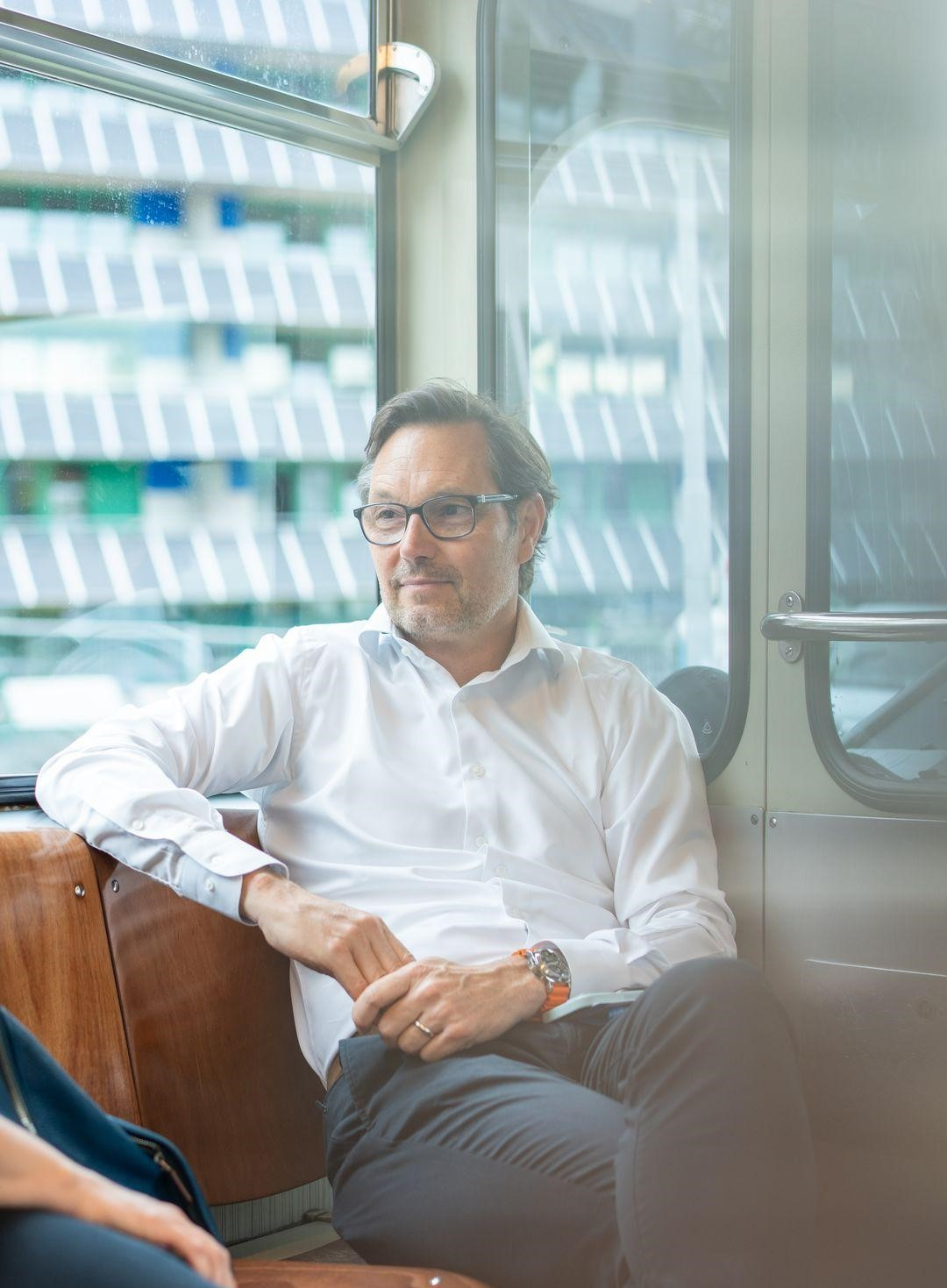

You joined the ISTH almost 14 years ago. How has the organisation, and your role in it, changed over the years?
When I started at ISTH, we were just five people, and now we're 36 people so obviously I’ve had to step away from the more day-to-day, hands-on things. Overall, the role of the CEO is now much more focused on making an organisation run smoothly in this ever-changing environment - making it nimbler, more agile, both on the staff level and the volunteer level. And as you know, associations are not necessarily built for that. Add the international dimension of our organisation, where you have people who have different viewpoints about how an organization should run, and that makes it even more complex – and, I think, more fun as well! The CEO has to be a broker of ideas because we are dealing with increasingly complex topics in the boardroom.
Has your leadership style had to change over the years?
I've had a huge leadership journey, and I've learned so much from the team and board in terms of how they grow and develop and share, thankfully, what they need in a leader. One thing that becomes more important is to communicate the vision. I'm not saying that I'm perfect at that. I learn every day. But it's like, ‘where are we going, and how can I make that happen for the team and for the board’, right? So that's important. I've become, I think, a much better listener, understanding that I don't control anything, really. I can only try to guide things in a certain direction, but I don't control anything. Which is a little bit weird for me, as somebody from a Germanic culture. We like to control everything, ideally! But that was a huge learning lesson for me, and I feel like I'm a better person and also a better professional because of it.
Do you have an active board or are they difficult to engage?
They’re amazing. I'm so in awe. I know how much pressure they are under in their clinical, research, education, administrative roles, and yet they are so dedicated to the organisation. Being an international society, when we put a call together, we have people joining at five in the morning and others at midnight and they show up, and they're prepared, and they come to us and say, ‘This is what I can do, and this is how I can help’. We’re very fortunate.
A lot of CEOs complain that their board is too engaged. Others complain that it's not engaged enough. You sound happy with your lot…
Yes, and it allows us to have this relationship with them. There is some work, obviously, from our side, that needs to be done to foster that. They could work with another association because they're all in high demand, so you need to make that experience as a board member very valuable. That starts by clearly articulating what we expect from them, but also, what value we can give them. It's very gratifying and heartwarming when we ask them, as they step off the board, about their experience, and these big, big names in the field say, ‘Hey, this was a highlight of my career!’ And you’re like, wow, that's just amazing! I mean, if we had to pay them, we could never afford what they give us.
What has been the biggest challenge you’ve faced in your career? The pandemic?
Post pandemic, I would say! In the pandemic everyone rallied around, and we just did what we had to do, but finding the new normal is difficult and doubly difficult as an international society moving around the world. All our calculations and projections and modeling were based on how everything was before the pandemic, and now there are so many other things that are happening, and we are much more susceptible to geopolitical events. As you know, people are more conscious around travel. A conference or big congress might be different, but some of the smaller meetings, where we used to fly everybody together for one day, that's just not happening anymore. And you know very well that the cost side has just exploded! AV, stand build …
Do you think delegate numbers will recover to pre-pandemic levels? Or are you expecting them to stay at a lower level for good now and those days are gone …
They have gone down more than we had expected, and we don't quite know why. Obviously, travel has become so much more expensive and people are more conscious about travelling long distances. We have a conference coming up this year in Washington and the following year, 2026, in Western Europe and these are typically very strong destinations for us, so they will help us find the new normal, because we still don’t know what that is. We’re probably ebbing and flowing a little bit with what's happening in therapeutic development. Are certain drugs on the rise or late in the life cycle? We feel that in terms of support from our industry partners, who have been amazing throughout, but you know, if they have a drug coming off market, they're not spending …
More generally, do you see face-to-face events still being a valuable marketing opportunity for sponsors of international association meetings?
Yes, that's what we hear from our corporate partners! Obviously, we need to provide a return on investment, so we are spending a lot of time speaking with them, working out what we do to make that interaction as valuable as possible for our members, first and foremost, and then obviously our partners. And so, we are doing a lot of activations in the exhibition hall, and we're giving them opportunities to meet and greet and connect and have business meetings with the attendees. When we look at our participant feedback, it used to be that the number one reason to come to a conference was education, and the number two was networking. That’s switched. Because you can easily get education online or you read the journal and so on. But networking, particularly at international scale, you need conference.
"DEI is one of those things that can often be viewed very much through an Anglo-Saxon lens ...

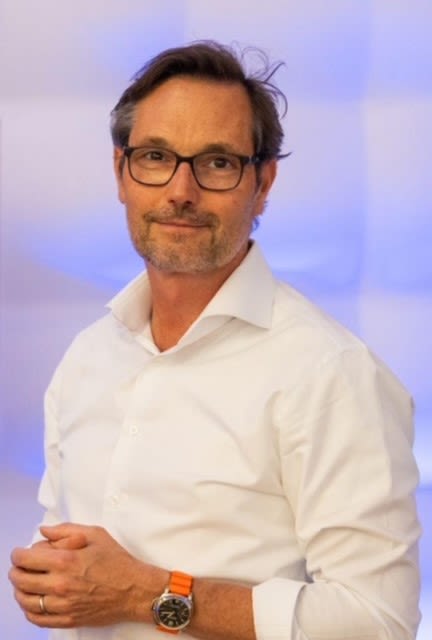
You're an international organisation but headquartered in one country. Is it difficult, then, to avoid viewing everything through a Western lens?
Yes - and our board is truly global! We have five continents and 16 nationalities represented on council. So, you get different viewpoints and perspectives, and that's hugely valuable but it makes it slightly more challenging. I think DEI, for example, is one of those things that can often be viewed very much through an Anglo-Saxon lens. And it’s complex enough, super important, but complex enough in a homogeneous group. Put it on an international level, and oh my God, it becomes very, very challenging. That is one of the big learnings, particularly in an international society setting, that these things are nuanced.
It strikes me that we live in a ‘big issues’ age - AI, sustainability, DEI. It can make the world feel quite fragile. As a leader, can you zone out of it? Or do you embrace the chaos?
TR Yeah, everything seems to be extremely amplified, particularly social media and as our director of marketing and membership always says, ‘What bleeds leads’, so everything has to be bigger and more terrible, so everybody runs to it. It is difficult to tune out, and I struggle with this, because often it seems like it's so overwhelming and it's so pressing. The reality is you must take it step by step. Take AI, for example. What we've decided, instead of trying to go in and do everything now, we have given the team a certain leeway. Hey, start experimenting, use different things, come together, share your ideas, but take it step by step. We're not going to change the world! We cannot just sit and wait, but we don't have the bandwidth to do everything.
Are you a tech optimist?
I am! When you see how quickly everything has evolved over the last few years and how beneficial it has proven to be. In the past, we had to outsource, and now our teams can do so much of this by themselves. It's amazing. I don't know if AI is going to bring the world to an end or make us all super productive while cutting out all the boring things we have to do. I hope it's the second thing.
Public discourse has hit rock bottom. Do you think associations can rise above the noise? Offer a glimpse at a more serious, polite, sane world?
Sane! I might not go that far! But I think it shows the importance of global meetings to build bridges, to expand your horizon. We had this discussion when we went to Bangkok with our congress. We wanted to bring in an audience that traditionally cannot get to a North American or European meeting just because it's too far or it's too expensive. And 61 per cent of our attendees in Bangkok were first-time attendees - so a huge mission success. And our western members, by listening to the content that was presented there really learned something about how healthcare is performed there, and that influences their thinking and their research and so on, and they build partnerships that they carry on after the meeting. To me that’s the poster child of how we build bridges, better understand each other, and how we collaborate.



 Built with Shorthand