No longer the laggard?
How meeting planners learned to embrace AI

People who organise conferences for a living tend to be ‘slow adopters’ of emerging technologies, preferring to take a wait-and-see approach before discarding traditional methods of delivery.
This scepticism is understandable. Planning events is high on the list of most stressful occupations, so why add to that stress with clunky, unreliable technology?
What’s more, organisers want to be sure the introduction of technology will improve the attendee experience, not make it worse. Paper programmes > Apps that don’t work.
The emergence of generative artificial intelligence (AI) in the last 18 months, and the deafening buzz that came with it, has once again challenged meeting planners to ‘embrace the new’.
True to form, initial reports suggest a degree of hesitancy.
A survey by Northstar Meetings Group, publishers of AMI, and Cvent, the event software giant, showed that while many planners have used AI tools, fewer expected to use them in their work.
It shows that 44 per cent of respondents’ organisations had experimented with generative AI platforms such as ChatGPT, Bing, and Bard, while 37 per cent had not - and 19 per cent were ‘not sure but would soon try’. Among the early adopters of AI, 42 per cent were uncertain of its usefulness for planning, whilst less than a third (32%) expected to use new AI tools for help in planning and producing events. The rest said they were ‘not expecting to do so’.
So far, so expected. But these results don’t tell the whole story. For elsewhere in the meetings industry, there have been concerted efforts to lose the ‘laggard’ tag, and lead from the front on AI.
The most high-profile is Project Spark, the brainchild of PCMA, the Chicago-based Professional Convention Management Association, and its technology partner Singapore-based Gevme.
Project Spark is an AI tool designed to increase planners’ productivity – helping them craft session descriptions, create speaker bios, produce social media posts and promotional emails etc.
It uses a variety of Large Language Models (LLMs) - such as GPT3, GPT4, and Anthropic’s Claude and Turing-NLG - to ‘provide a more diverse and comprehensive range of capabilities’ than ChatGPT.
Anthropic’s Claude, for example, allows users to upload a legal contract to Spark and get some recommendations on tightening up clauses etc. While this is not meant to replace a lawyer (!), it can save time and increase efficiency, which is the underlying aim of the tool.
"The tool reduces the chances of disappointment and helps organisers speed up the process of sifting through submissions...


Project Spark becomes even more bespoke to the meetings industry by using PCMA’s own content, as explained in recent webinar on the subject, hosted by Northstar Meetings Group.
Gevme CEO Veemal Gungadin said: “PCMA has a treasure trove of data, really good content around the dos and don’ts within the meetings industry and we are using this to train our specific models and give better recommendations that are very specific for this business.”
During the five months of Beta testing, the tool was free to use, an offer taken up by more than 3,000 event professionals whose inputs have also helped to refine Project Spark’s capabilities.
PCMA claims it is already much faster than ChatGPT at certain job-specific functions.
While a user could take up to five minutes brainstorming event ideas on ChatGPT, Project Spark can perform the same task in just 30 seconds, it claims. With the right prompt, a group promotional email could be yours in just 45 seconds – about six times faster than ChatGPT.
Beth Surmont, VP event strategy for 360 Live Media, is a regular user of Project Spark, and uses it to give her first drafts of sessions, run of shows, and session descriptions.
One of her favourite uses is generating speaker bios by uploading LinkedIn profiles, meaning a task that ‘used to take 15-20 minutes now takes five minutes’.
She explained: “As event planners is seems like every year there’s just more and more added to our plates. Planning is a very weeds job. There’s a lot of details. Tiny little things. And what this tool does for me is it frees up a lot of brain space so I can think and execute at a strategic level.”
Elsewhere meeting planners are finding very specific uses for AI.
Kenes Group, the Geneva-based professional congress organiser, has created an in-house tool that helps delegates produce the best possible abstracts for submission. The tool not only reduces the chances of disappointment but helps organisers speed up the process of sifting through submissions.
The tool is powered by advanced machine learning algorithms that have been trained on a vast array of abstracts from various fields. This training allows the system to understand the subtle nuances that differentiate a good abstract from a great one.
Once the user uploads their abstract for submission, the AI system quickly scans the abstract to understand its content, structure, and language nuances.
The AI evaluates the title's relevance to the abstract content and suggests improvements or alternative titles that might better capture the essence of the work.
It then checks for grammatical errors, awkward phrasings, and other language inconsistencies and provides recommendations to enhance the English quality.
The AI ensures that the abstract adheres to standard length requirements and checks for any punctuation errors or inconsistencies.
Using a vast dataset of previously accepted and rejected abstracts, the AI calculates the chances of the abstract being accepted, giving the user a preliminary idea of how their submission might fare.
Based on all the analyses, the system provides actionable feedback. This might include suggestions to rephrase certain sections, add or remove content, or modify the structure for clarity and impact.
Kenes has been trialling the tool with ESPID, the European Society for Paediatric Infectious Diseases, at its annual congress in Lisbon, which took place in May this year – and is planning a full roll out at the next ESPID congress in 2024, which has already opened its call for abstracts.
Uzi Drori, Kenes Group CIO, explained: “We took machine learning, and we fed it with all the abstracts from the associations we have worked with over the years - accepted and rejected.
“So, the ESPID delegates pasted their abstracts into our system and based on the analyses of the previous submissions, we showed them the results: what we suggested to change in the title, some remarks about the use of English, the chance of acceptance, and a summary of the abstract.”
“We got an impressive response from the association, they said that it really makes sense, and it also helps them with the abstract allocation, is helping their committees to understand which abstract is good for which session or topic so we are doing more work for them with this tool.”
"The benefit of using AI has been the reduced time it takes to pull reports together. so that I can focus on the wider strategic aims of the team...


On the supply side of the meetings industry, event companies have started incorporating AI into their platforms. Earlier this year Cvent announced the launch of its AI Writing Assistant. The tool, incorporated directly within the Cvent platform, uses generative AI to streamline the content creation process, helping event professionals and marketers produce on-brand, engaging event content in a fraction of the time. The AI Writing Assistant builds on Cvent’s growing suite of AI products, which includes session and attendee recommendations.
And it’s not all about event planning.
ASAE, the American Society of Association Executives, has been using AI to get better results from its member newsletter for the last five years. The AI tool it uses – rasa.io - monitors the behavioural patterns of each user and is able to make intelligent predictions about their areas of interest based upon their reading habits and similarities to other groups of users. The newsletter now boasts an open rate of 36 per cent, far exceeding average opening rates for newsletters.
How we are using AI in our working lives:
Emma Robson senior projects and events manager Alzheimer's Research UK

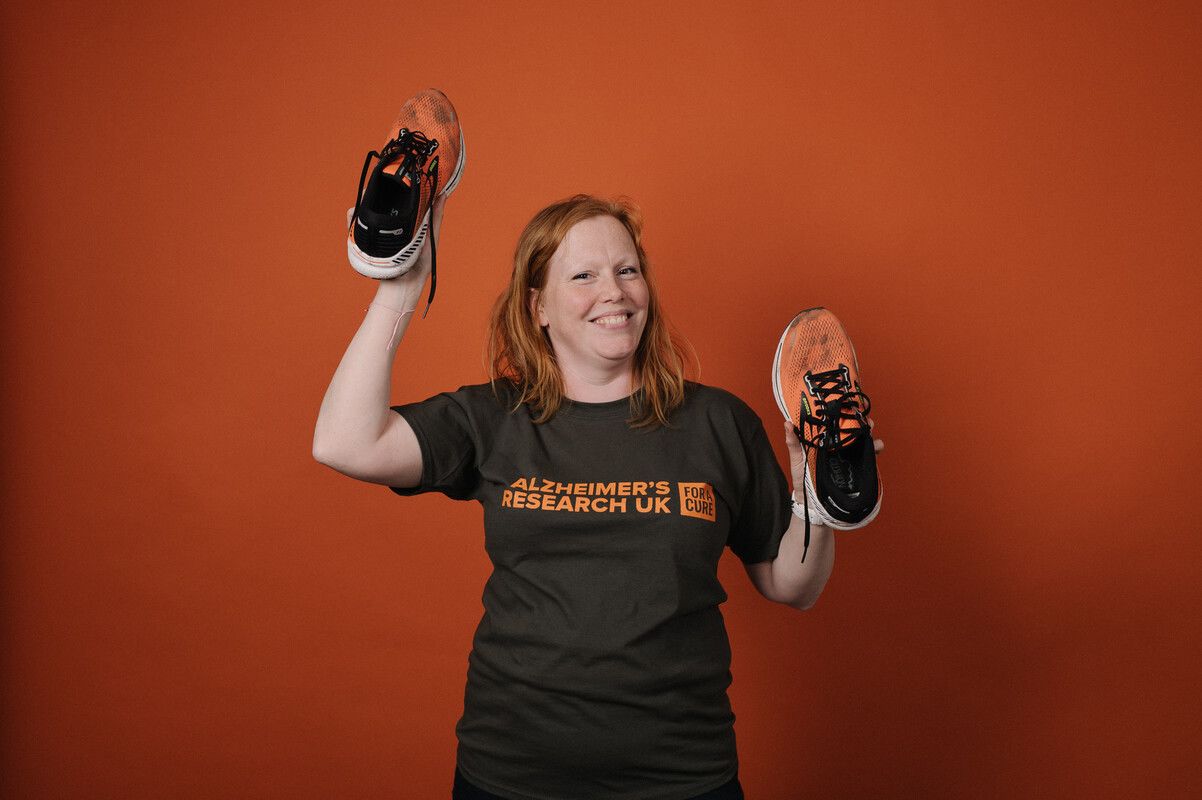
I’ve had some recent success using ChatGPT for events planning and administration. I found it particularly useful in distilling a crisis management policy and streamlining definitions to ensure a joined-up approach with risk management across the charity. My second tip has been using AI to help with excel formulae to better track team capacity and report on it. The benefit of using the AI function has been the reduced time it takes to pull reports and written documentation together so that I can focus on the wider strategic aims of the team.
Jerome Buchanan, Jerome Buchanan Consulting, whose clients include various European societies and associations.


With custom API connections, we tap into platforms offering in-depth details on both private and public enterprises. Rather than being overwhelmed by data, we are now able to harness it as a significant asset. Using Open AI's GPT-4 API, we quickly reorganise these databases, integrate them into our CRM, and convert them into actionable insights, boosting our lead generation for sponsorship and exhibition sales campaigning. For sponsorship fulfilment, event delivery or logistics, AI's integration into Notion means tasks that once took 30 minutes for key takeaways and action points now take a mere 30 seconds. Furthermore, Superhuman email has elevated our correspondence, learning our writing style and tone from past conversations, enabling concise, tailored replies from brief prompts. This tech synergy streamlines our operations, creating a new benchmark for results.”
 Built with Shorthand