
How associations can benefit from TED's localised climate strategy


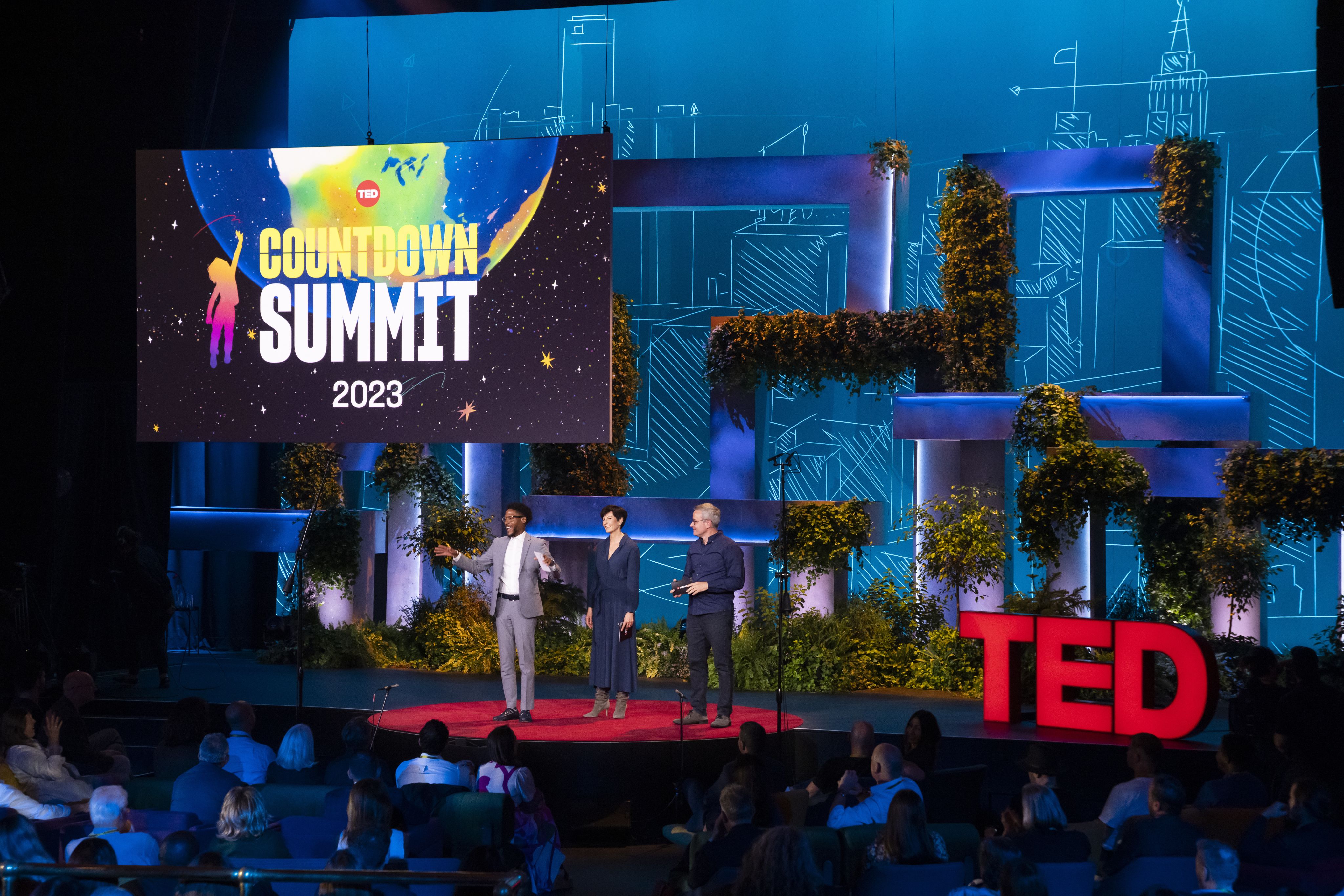
TED – the American-Canadian not-for-profit organisation that posts inspirational talks online – has been trying to design its international conferences in climate-conscious ways since launching the TED Countdown initiative in 2019.
The organisation’s “Five M’s” approach takes action in the areas of event Materials, Meals, Mobility and Meaningful Impact, while Measuring to support continuous improvement. As a member of the SME Climate Hub and Race to Zero, TED aims to reduce greenhouse gas emissions from event operations by 50 per cent by 2030 and reach net zero by 2040.
While much work remains, the TED Conference team has achieved two major breakthroughs so far: cutting food waste by 69 per cent since 2022 and freight emissions by 52 per cent compared to 2019.
In addition to lower-impact logistics, TED has developed a unique approach to carbon mitigation that holds lessons for association meeting organisers and destinations interested in supporting locally grown climate projects.
What is carbon mitigation?
Carbon mitigation for events is often associated with offsetting, a practice where organisers purchase carbon credits equal to the emissions caused by their event, making a claim to be “carbon neutral”.
Credits don’t directly reduce event emissions, but offer a way to compensate for carbon caused, often by planting trees or funding renewable energy. Offset purchases are usually voluntary and may be required by certain organisations operating in select jurisdictions.
However, offsets are controversial. While some projects generate additional, permanent and verifiable emissions reductions, others are critiqued as false solutions, supporting projects that are ineffective or inequitable.
These issues were a primary consideration for TED as it engaged TED Countdown partners in discussing how to mitigate event emissions.
Kyle Shearer, TED’s director of event operations, explains: “From the start, it was important to us that our approach to emissions reduction and mitigation was both transparent and credible—something our TED Countdown partners could stand behind. We weren’t interested in imposing outside solutions. We wanted to invest in ideas that were born from the places we gather—projects that could grow with our support. And just as importantly, we wanted to think bigger: to back efforts that not only reduce carbon but also create lasting social benefit.”


TED Foundation Climate Grants
Ultimately, TED’s event team settled on a strategy that has more in common with philanthropy or investing than traditional offsetting.
The programme invites event host destinations to nominate locally led climate projects to receive a grant from the TED Foundation. Nominations may come from local TED Countdown partners, the host venue, the destination convention and visitors’ bureau or community economic development office.
Grant recipients - some of them associations - are selected on their alignment with TED Countdown’s goal to advance climate solutions in the areas of Energy, Transport, Food, Materials and Nature. Work led by and of benefit to those most at risk from the effects of climate change is prioritised.
Grant amounts are determined by applying an internal fee to the total emissions generated by each event.
Since 2021, TED’s Climate Investment grants have supported:
● Restoration of the Airds Moss peatland outside of Edinburgh by the Royal Society for the Protection of Birds.
● Tree planting, job training and nature-based education for youth by the Greening of Detroit.
● Energy retrofits for Indigenous housing in British Columbia by the Aboriginal Housing Management Association (AHMA).
● Strategies to promote a clean energy transition in British Columbia by the Sustainable Workforce Coalition of the Zero Emissions Innovation Centre (ZEIC).
● The Just Energy Academy, a seven-month leadership program convened by the Partnership for Southern Equity, designed to educate and empower the next generation of energy equity and climate justice leaders in Georgia and Alabama.
George Benson, senior manager, economic development and market transformation for ZEIC, who was originally involved in proposing climate projects for the TED Conference in Vancouver, says: “The opportunity for associations and global, values-based events like TED to combine their expertise, purpose, values, and financial resources to support local projects that are already having an impact is catalytic. It’s a win-win investment for all involved, connecting events to a world-leading climate action community working on-the-ground in BC.”

Supporting Indigenous climate solutions
All project recipients must report outcomes, a step that AHMA recently completed at the end of their first grant in 2024. As a network of 55 Indigenous housing and service providers in British Columbia, Canada, AHMA’s members oversee 95 per cent of Indigenous housing units across the province for those not living on reserve.
The TED Foundation’s climate grant, when combined with other sources of funding, enabled AHMA to hire two new project managers and one development manager to electrify homes, improve energy efficiency and reduce emissions.
In the first 12 months of the grant the AHMA team executed building condition assessments for seven members and supported the completion of 11 improvement projects across the province, including installing in-unit heat pumps to provide more efficient and affordable heating and cooling, insulating and air-sealing to make homes more comfortable and reduce drafts, and upgrading appliances and transitioning to heat pump hot water tanks to reduce energy costs. AHMA also secured funding to initiate 320 hazardous materials assessment and energy studies that will positively impact buildings across AHMA’s portfolio for years to come.
Sara Fralin, AHMA manager, engagement and technical services, describes the tangible benefits TED and other funders created for their members in 2024.
“The results speak for themselves,” she says. “Outstanding successes that honour culture and prioritise healthy, sustainable, quality housing. Tenants have acknowledged more comfortable living conditions, reduced monthly utilities costs and a higher living standard.”
These practical and amplified outcomes, valued at more than CAN$40m, have led the TED Foundation to renew AHMA’s climate grant for 2025.
Fralin underlines how the mitigation project is about more than carbon.
“Everyone, regardless of background, must be given an equal opportunity to live in safe, sustainable, welcoming communities with affordable, quality rental units that offer healthy living spaces. Indeed, this is how we will walk into the future together confident that we have arrived with purpose and protected the next seven generations, as Indigenous peoples did for us.”
Each of TED’s climate grantees is nurturing an important idea that changes everything for the communities that rely on them. By supporting their ideas within the operational approach of global events, TED demonstrates how destinations can facilitate investment in locally led climate solutions in their own backyard.
“The work that AHMA - and each of our grantees - is leading is a powerful reminder that climate solutions aren’t abstract ideals. They’re personal. They’re rooted in community, culture, and care,” says Shearer. “When we invest in projects like these, we’re not just addressing emissions—we’re supporting dignity, resilience, and belonging. That’s the kind of future we want to help build. It’s a privilege for TED to stand alongside these local leaders, and to help elevate climate action that is as just as it is impactful, where success is measured not only in carbon reduced, but in lives improved.”
About the author


Shawna McKinley
Shawna McKinley
Shawna McKinley planned her first event during the 1994 Commonwealth Games when atmospheric carbon dioxide was 356 PPM. With levels now exceeding 415 PPM she works to help organizers lower the carbon cost of their events and ensure they leave a positive climate legacy. Shawna is an AMI Expert Contributor.
 Built with Shorthand