
Your first-time moderator is panicking. Here’s how to calm them down ...
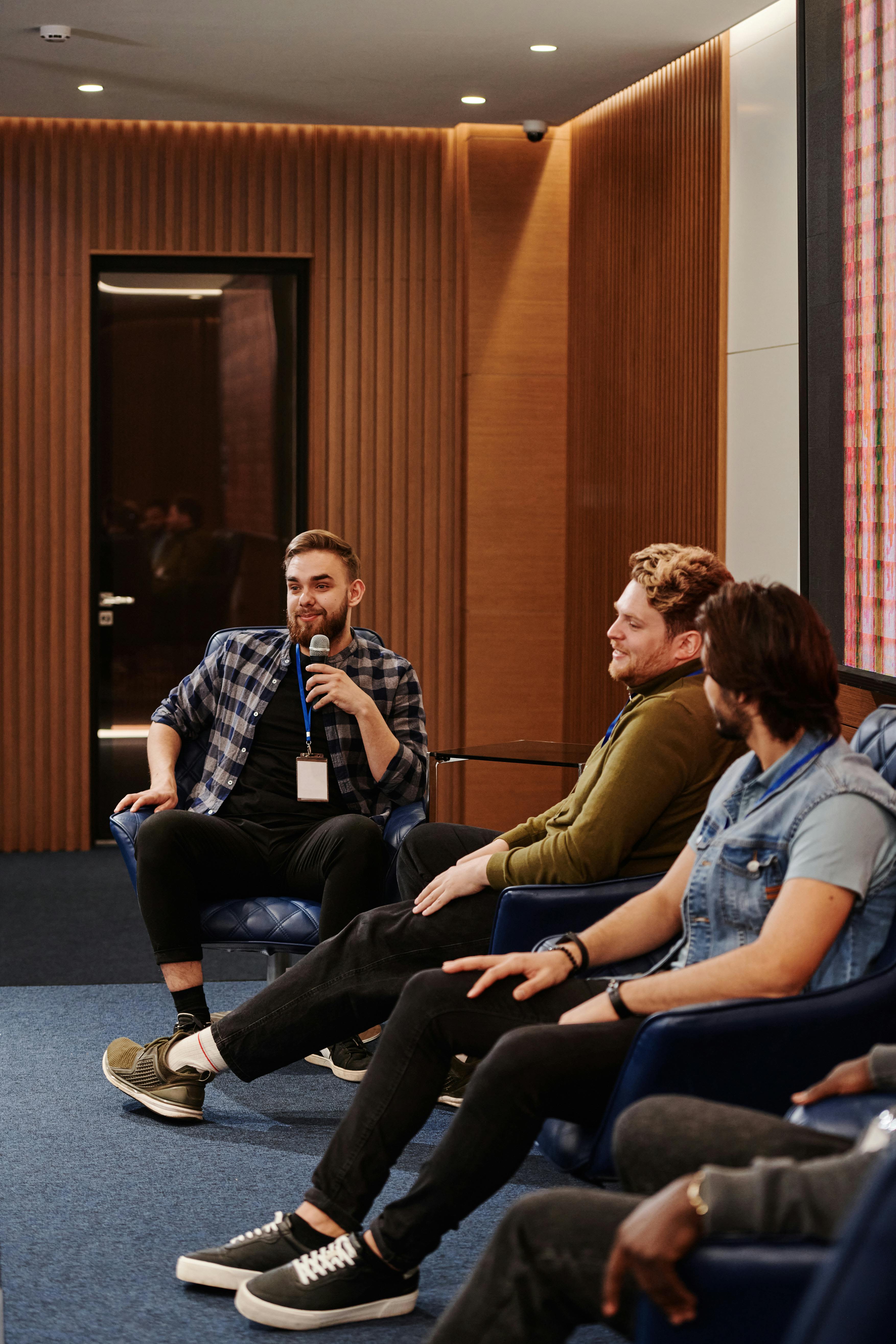

You’ve got a great panel lined up. The topic’s strong. The speakers are solid. And your newbie moderator? They’re quietly (or not so quietly) panicking. This is completely normal. Most first-time moderators assume they need to be quick-witted, insightful, and effortlessly in control for the entire session. They picture themselves juggling opinions, managing big personalities, and keeping everything flowing. No wonder they’re absolutely terrified.
But you chose them for a reason. You know they can do it. You just have to transfer your calm to them.
This handy guide to moderating a panel is hopefully all the reassurance they'll need ...
Plan the edges, manage the middle
You’ve volunteered to facilitate your first panel at a conference. If you’ve spoken or chaired a stream before, you’ve got a good head start. What you might not know is that most of what you’re responsible for is predictable. And that’s good news, because it means you can plan for it. Basically, you’re presiding over a conversation. You want that conversation to draw on the talents of your panel, be productive, go somewhere interesting, and deliver something new with a bit of personality and spontaneity thrown in. And you’re in charge of making that happen. That might sound hard, but it’s not rocket science.
A panel session breaks down into two parts:
· Set pieces: where most of your work is done
· A skill set: three simple skills to manage the middle
Set pieces: where most of your work is done
These are the parts you can plan, shape and rehearse. They do the heavy lifting because they frame, start and close the conversation.
They are:
Beginning: introducing the question being discussed and the group discussing it
Get going: how you’ll open the discussion and get the first few contributions flowing
Ending: asking for closing thoughts, thanking people and bringing things to a close
You can plan and rehearse what you intend to say in all of these.
A couple of practical tips:
For your beginning, be clear on the purpose of the panel and why it matters. That gives the panel and the audience something to hold onto.
For getting going, start with something easy to answer. A simple opener like “What are you seeing in your world right now on this?” works well. Avoid starting with the most complex question. It can also help to go to someone first rather than opening it to the whole panel. It’s worth doing a quick pre-brief with your panel so they know the shape of the session and where you might bring them in.
Work with the last couple of sentences the speaker said. You’ve got the best chance of remembering those, and they’re often where the point lands ...

Managing the middle
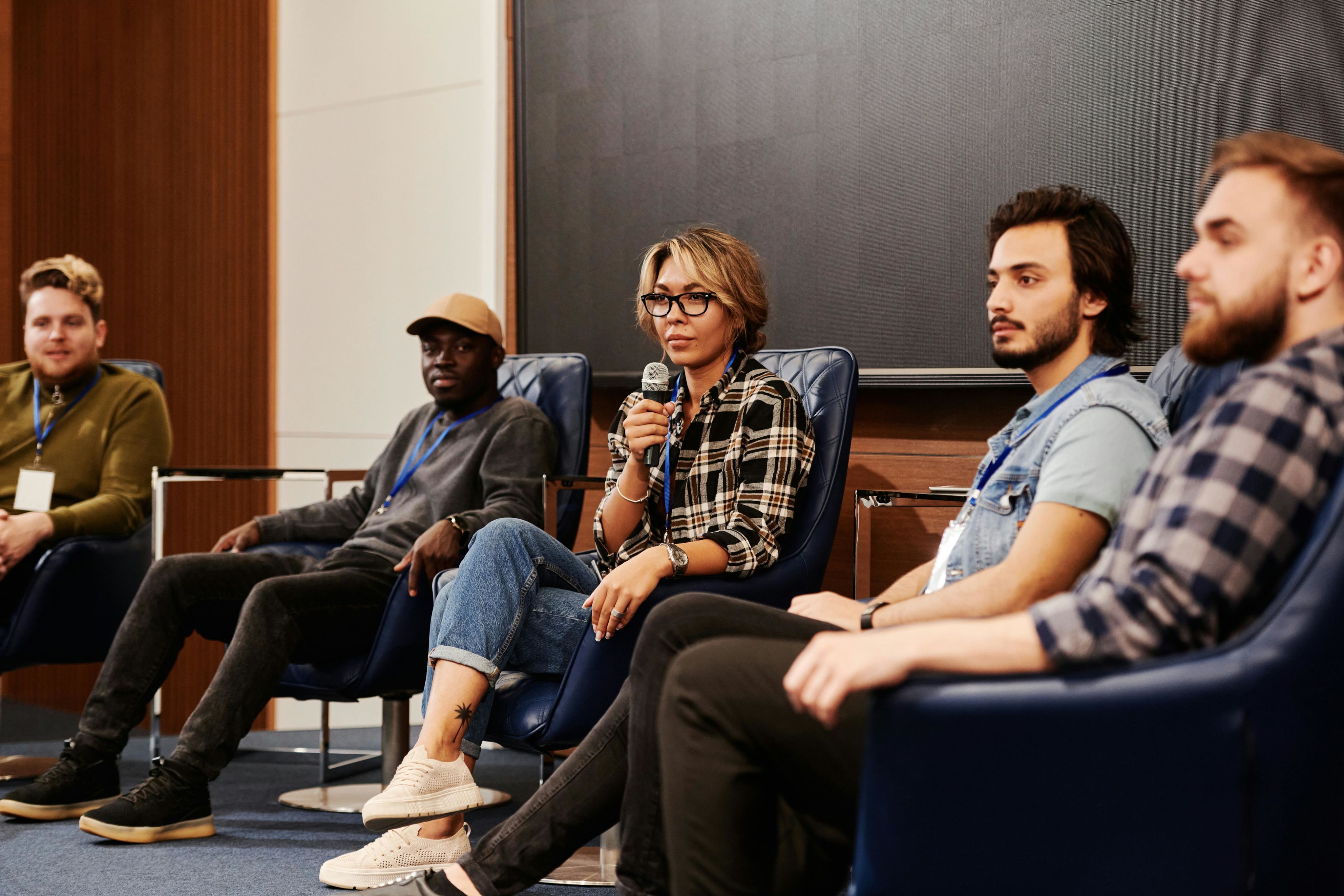
The middle part is where the conversation goes where it wants to go. This is where you step back, but stay involved. You’re tracking the direction of the conversation, listening to what’s being said, noticing what might move things forward and keeping an eye on the energy in the room. If it dips, change pace, bring in the audience, or shift the question.
There are three skills to work on. Used in sequence, you’ll come across as thoughtful, in control, and easy to listen to.
1. Listen
Listen right to the end of the last remark. Work with the last couple of sentences the speaker said. You’ve got the best chance of remembering those, and they’re often where the point lands.
2. Summarise
Take what you’ve heard and briefly play it back to the group.
Resist the urge to fill space with reactions like “wow” or “that’s amazing”. Let your listening do the work. Keep it short and clean.
3. Add value
Follow your summary with an invitation that moves things on.
For example:
General: “What do the rest of the panel think?”
Specific: “X, with your perspective on Y, what do you make of that?”
Audience: “I’d be interested to hear what the audience thinks of that.”
Observational: “I wonder if… what do you think?”
That last one is also useful when a silence hangs around a bit longer than you’d like.
If you listen, summarise and add value a few times during the session, you’ll be doing well.
Final thought
Facilitating a panel is a bit like being a chef. You can prep the ingredients. You can design the menu. What you don’t know is what people will order. That’s where your skill comes in. When you plan the edges and manage the middle, the rest takes care of itself.
About the author:


John Scarrott is a Communication Skills Trainer and ICF PCC Coach. He supports Associations, Societies and Federations to add value to their events by offering training that enhances the performance of their speakers, chairs and facilitators. Find him at AAE where he provides training https://www.associationexecutives.org/training/trainers/john-scarrott.html and on YouTube.