
How singing bowls saved our association
A psychological approach to change-making meetings


The prospect of association dissolution has a powerful way of clarifying purpose.
At least it did for the Association of Sustainability Practitioners (ASP) who, several years ago, were called to answer a difficult question: “What does the world look like without ASP?”
Rather than shutting down the organisation, openness to contemplate the hard question led to a renewed purpose. One that allowed ASP to more confidently define its role: to provide sustainability professionals with the space to safely explore the challenges on their journey.
“The prospect of killing off the organisation enabled an evolution. It helped ASP realise how much the community needs to be connected, challenged and supported,” states Gwyn Jones, Director.
Jones describes how providing deep listening spaces – such as Wisdom Councils and member meetings – have been key to achieving this purpose, and help members make sense of what they are experiencing. The approach is simple, but the outcome is high-value for members.
Invitations to these gatherings include a prompt or topic that will be discussed. Members then convene online around a symbolic children’s fire. “The fire is a reminder of what is at the heart of the work: care and concern for the next generation.”
Using an Indigenous talking stick model, participants offer their thoughts on the prompt for the first hour of the session. Using the same approach, a second reflection is shared, based on the initial round of discussion.
"We create the space to be heard, not explained to. Everyone speaks. Everyone listens. We go out knowing better what we need to do,” describes Jones.
For associations not used to this type of organic, Indigenous-informed approach, the process can seem scary.
Jones describes how for ASP there was little option other than evolution: “Our organisation is wanting to become something. And these meetings are key to learning what that is for ourselves as Directors with our members. It’s a community, not a network. It is about relationships. Relationships provide safe space. They nurture.”
Jane Shaw, ASP Director, describes how many people arrive at ASP through traditional and functional channels, such as training programs or online learning sessions.
“These channels allow people to experience if our culture is a fit for them. Some find it isn’t. But if they do, they can determine how to take advantage of the opportunities we create to try things safely. Once they’re successful, they can then take the knowledge they gain, or products they create out to their communities, workplaces and networks.”
While ASP hosts in-person and online gatherings, “conference” is not a term used to describe what they do. This is somewhat by design. “Conferences have not proven a sustainable model,” says Jones.
And, over time, many associations may wind up sustaining conferences as an outcome unto themselves. So, rather than a means to an end, the event itself becomes the purpose. This, in turn, can cause resistance to change, reinforcing old ways of doing.
Jones offers a different word for ASP gatherings that better reflects the psychological context provided to members: singing bowls, referring to objects commonly used in meditation and for personal healing.
“We desire an inspiring future together. Creating that starts with ‘I don’t know’. Then, we create the bowl for people. But really, the bowl isn’t important. It’s what happens in and around it. It’s about people, and opening their heart-space. It’s hard, but it feels right. And if it feels right and you have the means, you find the will.”

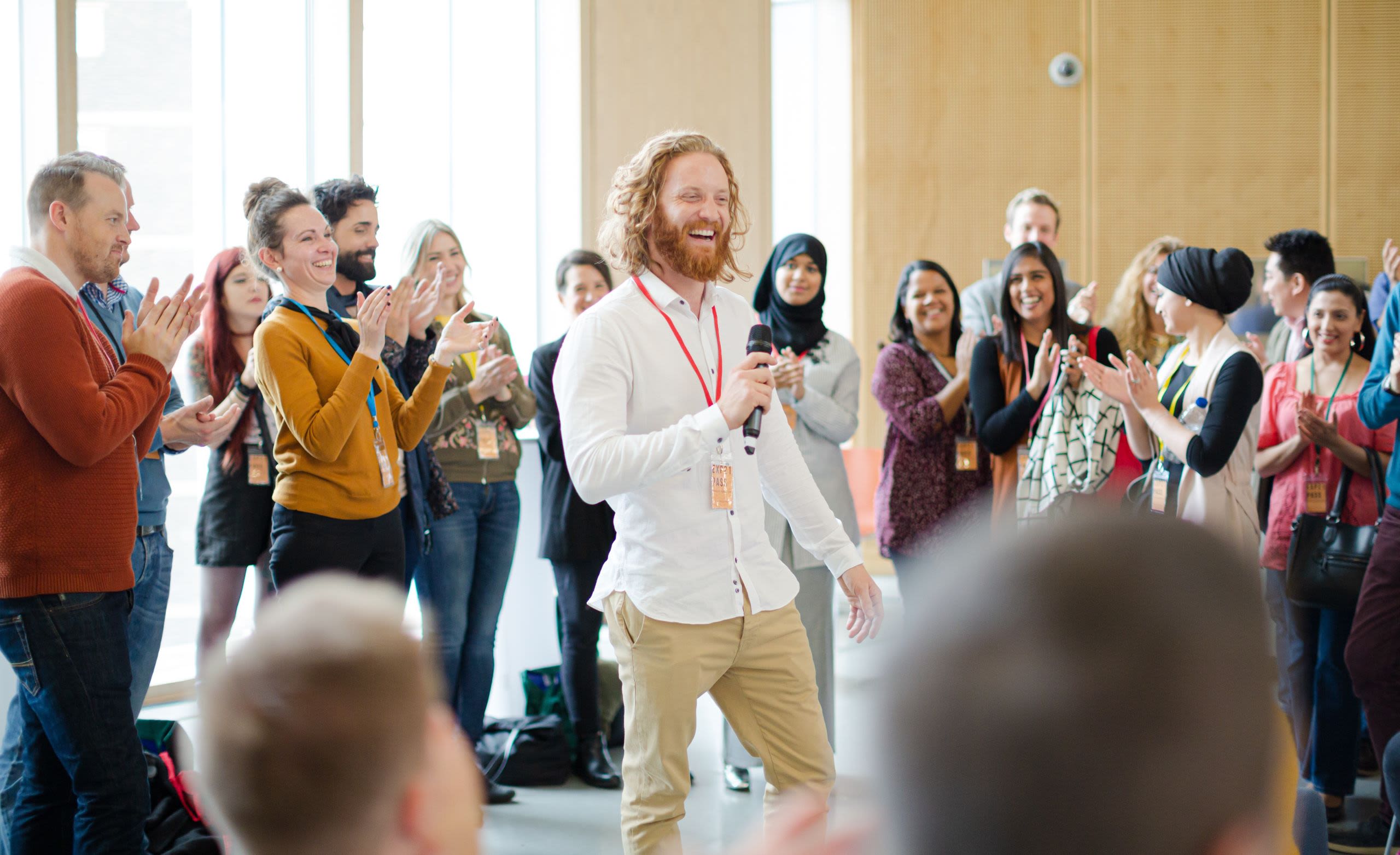
So what does your meeting design say about your association’s approach to change? And does your convening reflect how members really think and feel about the challenges they face?
At their heart, associations seek to provide community and improve member well-being. An important purpose that is typically served in the throes of change, as members confront the day-to-day implications of disruptive technology, climate change and social movements.
While difficult to navigate, these global challenges represent a significant opportunity for association professionals to step up and serve as guides for change.
“The desire and necessity for connection, sensemaking and guidance are immense. All of this requires us to be responsible, reflect and consider how we are showing up: as participants, contributors, curators and conveners,” explains Dr. Renee Lertzman, a psychologist and engagement strategist who helps organisations and individuals seeking to make and manage change.
Associations are already responding by raising awareness about how communities are being transformed, educating members about what they can do to adapt, and cheering them on with awards and incentives.
Meetings become a key vehicle for delivering informative content, providing tools and resources, celebrating success and connecting with experts who can help.
However, what is sometimes missed in this outside-in approach is an appreciation that human transformation happens from the inside-out. According to Lertzman, this requires associations to deeply attune to stakeholders and reflect on how convenings may help and hinder members from relating to and making sense of complex situations they face.
Consider, for example, the role of planning committees. While they enable participatory approaches, they can present problems if special interests take hold, or if they perpetuate unhealthy norms of behaviour that can be difficult to name, never mind change. Attuning requires empathy and humility to be transparent about association and societal power dynamics that can create friction and dissonance for members.
In addition to tuning in to those already engaged in events, it is important for associations to also consider voices that may be missing. While many associations express a desire to welcome and listen to new members, meeting norms around fees, registration categories and labels, technology use, visa requirements, childcare, translation and culturally sensitive practices can affect who is included and excluded. And in turn, creates a perception of how open the association is to change, and how skilled it is at facilitating it.
“People need space to process big challenges that are intractable, systematic, scary, and may even be a source of guilt ...


New formats
Attunement can also involve experimenting with new formats. Lertzman suggests that in order to internalise change, people need time to relationally process keynote and panel messages, where the tendency to 'talk at' can be high. This is key to sense-making, and can be enabled through a short paired reflection activity immediately following a session.
“People need space to process big challenges that are intractable, systematic, scary, and may even be a source of guilt.”
Other tools may include flexible programs and living agendas where small group discussions can take place in a more organic way.
Venue selection is also important, as people may interact differently depending on the environment they are in. Meetings in nature may enhance a sense of connectedness, disrupting some of the boardroom dynamics that indoor conference environments can reinforce.
Lertzman also points out the importance of considering the "theory of change muddle" that can exist at conferences, summits and events.
“This is when people are talking past each other, arguing for their deeply held theory of change. Whether it's policy, or education, or better data, or arts, or regulation or incentives or better storytelling -- we all have our theories of change. And we defend them.”
She provides advice that is especially pertinent to program facilitators at association meetings: “It's imperative to develop literacy when it comes to our theories of change. So we are in choice, not just defaulting and being reactive to our assumptions and biases.”
“However, theories of change are sensitive territory. These are deeply held to our hearts, often reflecting a lot of time, money and training. So we want to tread with compassion. We are all figuring it out.”
Another lesson is the importance of equipping members to nurture and sustain transformational work beyond the convening. “Are our formats actually fostering connections that last? What can we learn, experiment and evolve?” Lertzman asks.
This speaks to the importance of feedback loops and enabling ongoing engagement. For example, associations can nurture communities of practice year-round by establishing small, self-organised networks or member-led hubs that can equip individuals to sustain commitments they’ve made at major gatherings.
“Our times are asking us to level-up. Big time,” Lertzman stresses. “This is our moment to evolve as humans. To support each other. It's hard when we are still living in the same system that created this mess. But we can do it.”


This feature originally appeared in the November issue of AMI Magazine

 Built with Shorthand