How to...move your flagship meeting overseas (for the first time)
The story of how a US-based society completed the ‘daunting task’ of moving one of its banner conferences to Europe.

Like a lot of international conferences run by American professional bodies, the biannual International C. elegans Conference was firmly planted in American soil. The international in its title referred to the audience profile, not where it was held.
But that all changed last year when organisers, who had been mulling the possibility of taking the event to Europe for several years, held the event in Glasgow, Scotland, breaking a tradition that had lasted almost 50 years.
Until then the conference had been campus-based, starting in 1975 at the University of Wisconsin, Madison, before moving to the University of California, Los Angeles in 2001.
However, in the late 2010s the conference’s leadership team felt the time had come to reach out to its international audience and take the event outside of the USA.
At that point, 30 per cent of the 1,600+ conference’s attendees were from overseas.
It was hoped a move to Europe would broaden access to international delegates by shortening travel time commitments whilst reducing attendee travel costs.
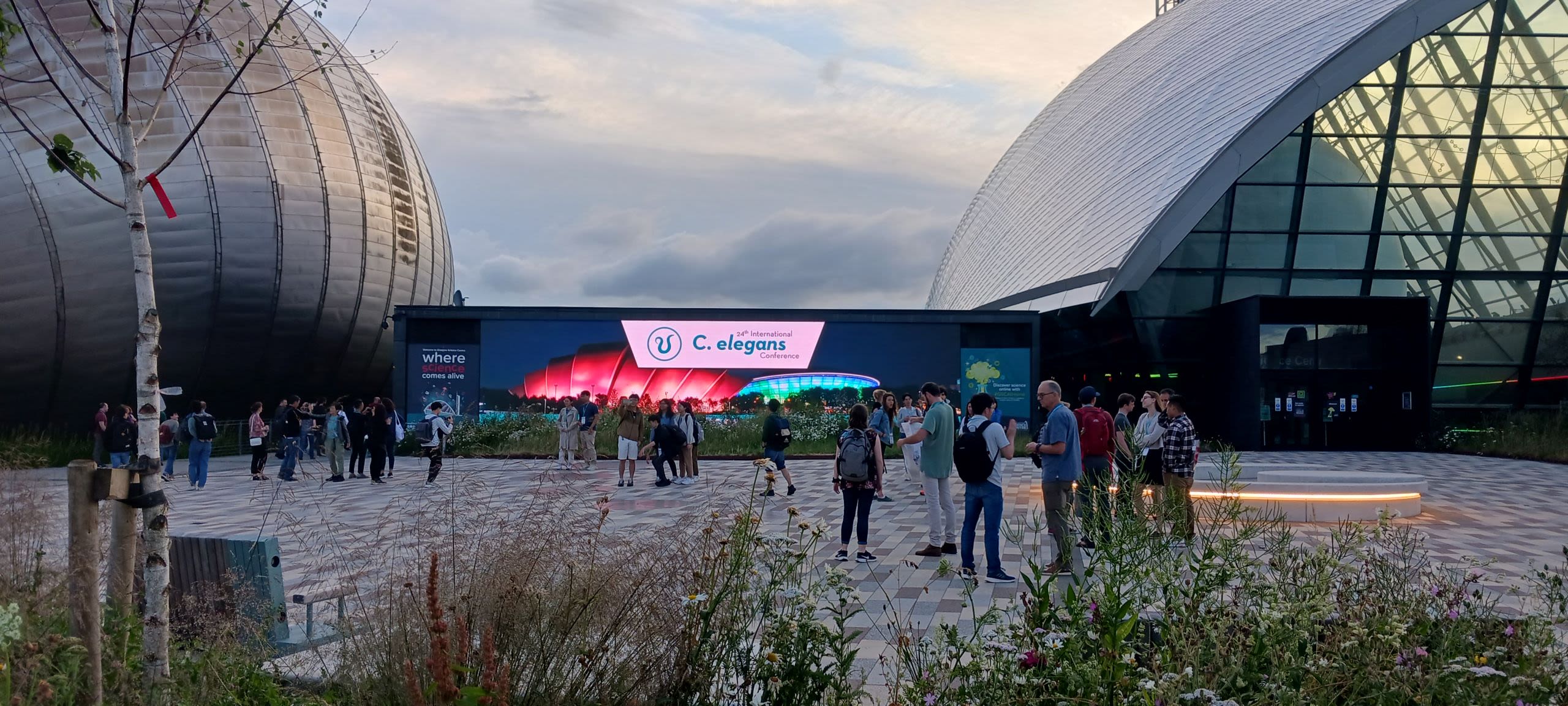
And so it came to pass that in June 2023 the Scottish Event Campus (SEC) welcomed the 24th International C. elegans Conference to Glasgow for the first time.
The event, sponsored by the Genetics Society of America (GSA), is the premier international convening of the C. elegans researchers, from undergraduates to Nobel laureates, all interested in this fascinating area of microbiology.
Its arrival in Glasgow was not just the first time the meeting had convened outside America, it was the first time it had been held in a huge, purpose-built congress centre. And it all happened despite a pandemic-enforced change of date.
"We wanted to reach out to our international audience, but without any detriment to the quality of the experience...


So, how did they pull it off?
The answer from both the organisers of the affectionately named Worm23 Conference, and the team at the SEC is the same: collaboration. Money would be passing hands, for sure, but success would depend on building a relationship that was not just transactional but based on identifying and achieving mutually beneficial outcomes. In one word: partnership.
The structure of the conference itself is vast. Held over four days, it consists of hundreds of presentations covering the full sweep of C. elegans research, including genetics (C elegans were the first creatures to have their full genome sequenced), molecular biology, and cell biology. It stimulates new areas of research relevant to medicine, covering areas from immunology to physiology and neuroscience. The sprawling event includes speakers, workshops, poster presentations, and exhibitors, as well as professional development, networking events and an Art Show highlighting C. elegans.
Worm23’s organising team was spearheaded by Anne Marie Mahoney, GSA director of conferences, and the GSA leadership, who, once the decision to hold the event in Europe was taken, immediately sought to establish location, supplier partnerships, and the infrastructure needed to take the event to a new destination.
“It was a daunting prospect, mostly because the event had built so many long term and productive relationships within the US,” recalls Mahoney. “We needed to build equally strong partnerships from the outset to ensure the complexity of the event, and the diversity of the audience would be coordinated seamlessly. We wanted to reach out to our international audience, but without any detriment to the quality of the experience.”
Mahoney and her team began the process of picking a destination and venue late in 2018 with Professor Barbara Mable, based at University of Glasgow, endorsing Glasgow’s bid.
The team at GSA eventually refined its search to a final shortlist in 2019, with the SEC emerging as the preferred venue. The event was scheduled to take place in 2021 and plans were well underway.
Then the pandemic hit.
"...the subject matter and the make-up of the conference was right for us, and we wanted to show, from the outset, that they had made the right decision.”

Jennifer Roddie, senior sales manager & lead bid strategist at SEC, led the initial conversations with GSA, then worked with them to manage their event during the global shut down, which meant meeting in-person, in large numbers, impossible.
“We prioritise long-term relationships with our clients and look to do 'good business' by taking a supportive and collaborative approach, and this is exactly what we did with C. elegans,” she says. “The main priority was to find the next available date for the event to take place, to play our role as a venue in minimising the impact on GSA and the C. elegans budget, and to work with Anne Marie and her team on the administration and logistics of moving a meeting of this scale.”
It was this approach that made what could have been a defeating experience for the conference into one that left the organisers with no doubt that they had the right partner in place for their event.
“From the outset we had a great feeling about the SEC and the team at the venue, and we knew we’d made the right decision by how they went about their business when the pandemic struck,” continues Mahoney. “They made a horrible situation bearable and manageable. It was incredibly hard putting off all the work we had done, but it left no doubt in our minds that we had the right team around us.”
The pandemic delayed the event by two years, and throughout, the SEC and GSA kept continual communication to manage what was an ever-evolving global situation. In the meantime, the team worked together to put in place the planning and infrastructure needed to make the event successful. Open dialogue and listening were a key priority for the SEC during this challenging period.
“Over that period, we really got to know everyone across the SEC, from the initial bid team to the operational and technical departments,” adds Mahoney. “The SEC kept us up to date with the work they were doing around sustainability, food, and legacy. They shared what they were learning across other conferences and brought new ideas into our own. It was a really positive and collaborative experience.”
Despite the ambition of the move, from the US to Europe, from a University Campus to a global conference venue, and through a pandemic, the event attracted 1,400 delegates with international attendance increasing to 55 per cent of the registrants.
At the same time more than 300 digital delegates followed remotely as the event embraced hybrid technology for the first time.
“The SEC were able to support with an in-house streaming solution, at a low cost, which enabled us to reach our wider global community.”, says Mahoney. At the same timeWorm23 pushed new levels of content and research forward, looking at emergent topics and the inclusion of a specific session on DE&I.
Roddie adds: “This was a really important event for us. It’s one we desperately wanted to come to Glasgow, the subject matter and the make-up of the conference was right for us, and we wanted to show, from the outset, that they had made the right decision.”
“The SEC and Glasgow created the buzz that we were looking for from the event,” concludes Mahoney. “We also felt truly welcomed. From the branding and posters at the airport, in the city, and around the venue, to the knowledge of the cab drivers and the local city staff. There was a genuine sense of arrival, everyone felt very special. Everyone at the SEC and the Glasgow Convention Bureau made the transition to an international site seamless. From contracting the venue in the currency of our choice, easy access to Glasgow from around the world, to personable, and likable people on site that really felt like an extension of our GSA team working towards the common goal of creating an exciting and rewarding event for our attendees. They made a big step for us into a very easy experience. The conference was a genuine success, and we were really delighted.”
Lifting a successful conference model from one continent to another is a daunting prospect. To handle it with confidence takes care and consideration, but also that most important ‘c’, collaboration. Research within the conference industry shows that trust in the onsite team is just as important as the desirability of the venue and the destination.
 Built with Shorthand