How to manage cultural differences at your meeting
(hint: acknowledge they exist!)


By default
The default line of thinking starts with the idea that, thanks to globalisation, cultural differences are a thing of the past. There may be some different customs or some practical matters, but in the main these are irrelevant. Good suppliers with relevant local knowledge will solve such issues.
Some meeting organisers feel it is inappropriate to even acknowledge cultural differences. The reason for this is that thinking about cultural differences is fraught with the risk of stereotyping and stereotyping is not only faulty thinking, it is insulting.
Another default stems from the fact that many international organisations, especially Western corporations, have adopted diversity policies aimed at inclusiveness. Under these policies, all members of the organisation are to be considered as individuals who are all equal. Explicitly considering individuals as members of a group is discriminatory and unacceptable.
And finally, even if meeting organisers recognised cultural differences, it is part of the default way of thinking that there is no accepted methodology that helps you to work with them in the programme.
What are you missing?
Each meeting participant is an individual and individuals may respond in unique ways to anything, but people's cultural origins play a vital role in how they respond to just about anything that can happen in a meeting. Take the role of a chairman or a moderator for instance, in many countries this is considered an honorary function. In others, this role must be fulfilled by a person with expert subject matter know-how. In yet others, participants prefer more of a generalist capable of running the show smoothly. Often this is a professional moderator. For the participants from the other two groups, this professional is likely to lack credibility.
One of the insidious characteristics of cultural differences is that you don't know what you don't know. Imagine this, a large multinational company organises an online event for its top 150 executives. It should address the company's strategy as it is going through difficult times. Most of these managers are from a variety of Arab countries. In fact, the company originates in the Gulf region. The event on the other hand is programmed in the US where the HR function is located. Pre-event communications focused strongly on content, emphasising the importance of taking part and each manager’s individual responsibility to do so. Eventually, less than 50% of the target audience shows up for a strategic meeting, In a time of crisis. What was missing here?
The expectation of the Arab executives was for their CEO to talk to them beforehand and highlight the value of this meeting by his sheer presence in the pre-event invitation message. This is a logical expectation for people from relatively hierarchical cultures, such as those from the Arab Peninsula. On the other hand, for people from a more egalitarian individualistic culture at the US, it would feel like an unnecessary appeal that would weaken the message about self-reliance. The discussion about this issue never took place because of the default thinking we described earlier.
The question they should answer is: is all this appropriate or is it not?


By design
There's one thing you can do when you have an upcoming meeting with participants from a variety of countries. Get a small group of people together for a culture safety test. Involve people who have personal experience in working with the countries you are not familiar with. Ask them to check all your plans for obvious pitfalls. Make sure they do not limit themselves to the easiest stuff such as meals and seating, but expressly ask them to focus on things like roles and responsibilities in the programme. The question they should answer is: is all this appropriate or is it not?
We recommend you acknowledge the fact that cultural differences are relevant in international meetings and then familiarise yourself with the basics of intercultural management. Work with a model that describes the differences in a value-free manner. A very accessible one is a six-dimensional model developed by Professor Geert Hofstede. It is based on large scale research and impeccable statistics, and it has been widely validated as a viable way of describing the differences between national cultures. He calls culture the ‘software the mind’.
The next level
We call the method by which you find ways to overcome the cultural differences between participants the Third Way. This approach means you offer participants experiences which satisfy the expectations of both or more culturally different groups or participants. In the above example of the Arab US corporate meeting, the third way would have been to record this year's message to send it to future participants and to write the covering email in such a way that watching the message can be understood as a voluntary act, or an act of individual responsibility that would have satisfy the needs of both Europe and the US participants.

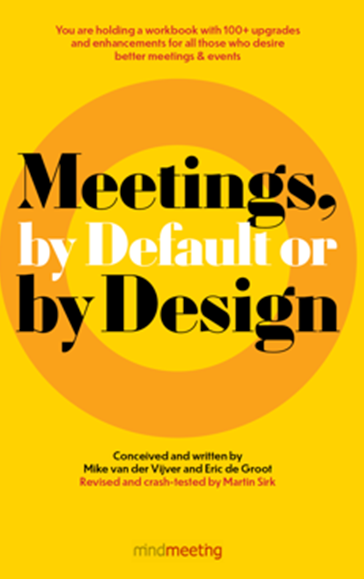
About the book
This is an abridged version of a chapter in Meetings, by default or design. AMI will be publishing extracts from the book throughout the year. In 41 short chapters, the book acts as a reference manual, showing readers how and where they can improve the quality of their meetings. Each chapter starts by describing common practice and the opportunities planners miss when doing things this way (the ‘By default’ section). Next come two pieces of advice to improve things (the ‘By design’ section) – one, a relatively simple change that, in most cases, could be applied to already existing meeting programmes, the other - called “The next level” – altogether more sweeping and drastic.
About the authors


Dutchman Eric de Groot is one of the first Meeting Designers: his pioneering work started in 1992. With his friend and colleague Mike van der Vijver he co-wrote ‘Into the Heart of Meetings’ referred to as the bible of the changing meeting industry. ‘Meetings by Default or by Design’ also co-authored with Mike, intends to help meeting owners to improve their meetings exponentially. ‘From Audience to Contribience’ is Eric’s design motto.

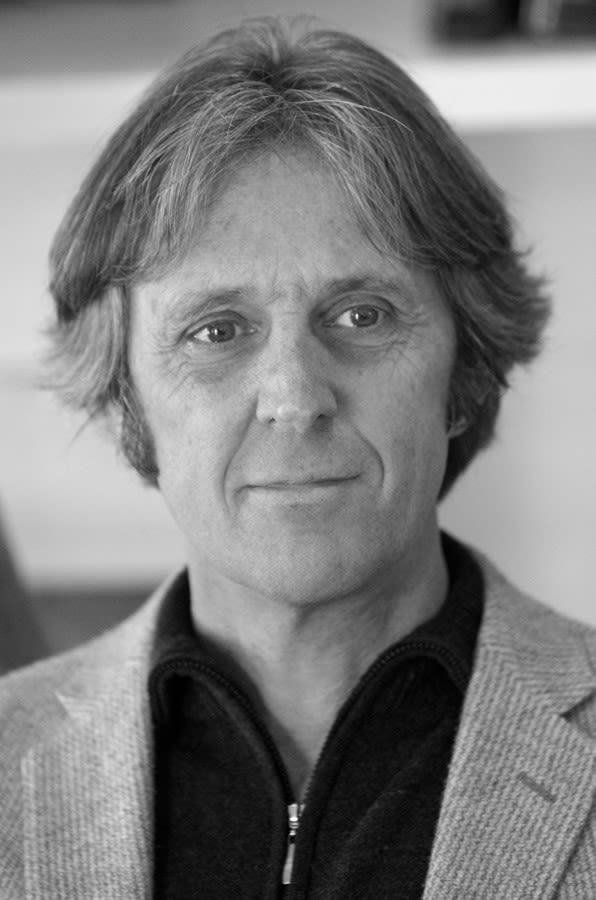
Mike van der Vijver is a meeting designer, facilitator, moderator, and intercultural management advisor. He has been for over 20 years. Together with Eric de Groot, he wrote two books on Meeting Design: Into the Heart of Meetings and Meetings, by Default or by Design.
 Built with Shorthand