Meeting design: who has the final say?
There’s not much you can do if your boss vetoes a crucial element of your event at the last minute. The trick, according to Eric de Groot and Mike van der Vijver, is not to ask for ‘feedback’…


By default
Putting together a meeting programme usually involves two sets of people. First, a small group of organisers who make programme proposals and cover the operational side of things. This group includes the meeting planner. Second, there is a somewhat more distant group overlooking everything and giving feedback, usually a CEO or a board of some kind, what we might call ‘the powers.’ This last group, or individual, usually has the final say. The needs of both groups and the criteria by which they judge a good meeting programme may differ. Decision making about the meeting programme depends on how these two groups interact.
The organisers and ‘the powers’ give shape to the meeting and its programme, but their respective contributions and relationship may vary greatly. It looks like a sliding scale. On one extreme, is where the organisers work with a high degree of autonomy. The validation with the powers feels like a ritual: just a couple of clarifications, some suggestions and you're done. Ownership is shared, and although the powers may officially have the final say, they exert little of their decision-making power. The other extreme is where the organisers are keenly and constantly aware of the powers and their spoken or unspoken wishes. So keenly, in fact, that managing the relationship becomes an ongoing search for solutions that the organisers hope will make the powers happy. They want to come up with a programme in which the powers cannot possibly find any flaws. The result is that the organisers avoid risk and experimentation as much as possible.
What are you missing?
If you are an organiser, at some point the powers will give you feedback about the preliminary programme you have designed. What is missing is a way to manage that feedback and ensure that it will not damage vital elements of the programme. Part of that approach is to establish a shared language or vocabulary to address what the meeting is for: the goal.
Before giving you advice on managing this input and feedback, however, it is important to identify areas which may give rise to potential confusion.
The first is a lack of clarity between the two parties about the strategic objectives of the meeting and the bigger picture. Clearly this is where the powers usually have a better vantage point, but not always. The general default of planning meetings simply by repeating what people have already seen is very powerful. Connecting the meeting with a bigger picture is by no means common. Important differences of views may exist on the roles certain individuals should play during the meeting. The powers might want certain people to take centre stage for reasons that are not necessarily connected to the objectives of the meeting. Sometimes this happens for opportunistic reasons. For instance, because these individuals are powerful, or they have funded part of the meeting. It is easy to see that accommodating these requests may jeopardise a balance in the programme.
Next, differences may exist on what needs to happen in the programme to achieve your objectives, both the strategic objectives we mentioned in the previous paragraph, and the specific objectives of the meeting. This may apply to content but usually even more to formats and participant activities. There's a general lack of knowledge about meetings as a form of communications, about how they work, about what needs to happen to transform something in participants’ minds, about how such transformations are essential in achieving the meeting’s desired outcomes.
In all sectors of the economy and at all levels, people have little exposure to well-designed participant activation and interaction. Both these words contain the root ‘to act’. For decades the default has been for delegates to remain, essentially, inactive during a meeting. There may be commercial or even political reasons for not asking participants to express themselves. All these reasons may be valid, but they lead to a situation where the dynamics between participants are seriously stifled. It is as if they were set in plaster casts. And that causes bland and predictable meetings. The later you tackle this feedback about the dynamics between participants, the harder it becomes to find solutions to the powers’ objections, however valid these might be.
...you should get their commitment about strategic objectives, the big picture, and the leeway in the programme regarding delegate activities...


By design
You should collect input from the powers rather than feedback, and it should be collected early on. It is vital to get them on board in the design process as early as possible. Before even producing a preliminary version of the programme, you should get their commitment about strategic objectives, the big picture, and the leeway in the programme regarding delegate activities.
Once these foundations have been clearly established from the start, organisers, designers, and the powers themselves can build on them later. Once you have the powers commitment, you can demonstrate at a later stage how their input has been integrated into the programme. At that point, there may be a discussion about the how, but not about the what. You will have covered that in the initial discussion. The hardest part of this stage is to keep the conversation at a general level without committing to any details about the programme such as speakers and formats.
It may be difficult for the powers to imagine how the big pitch will translate into the programme. It is good to help them with examples but keep telling them that these are just some first ideas, and they are not necessarily what is going to happen. They will need to wait a bit before you can show them these details in a first version of the programme based on the very input you're putting together. In our experience it is worthwhile to plan input from the powers after you have done your participant interviews. They shed a light on participant needs and expectations. So, the insights they produce have implications for the role participants should play in achieving the outcome.
About the book

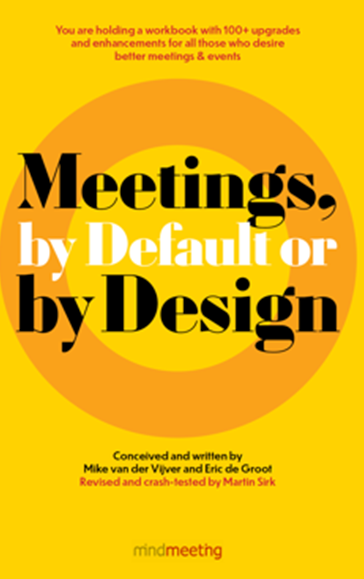
This is an abridged version of a chapter in Meetings, by default or design. In 41 short chapters, the book acts as a reference manual, showing readers how and where they can improve the quality of their meetings. Each chapter starts by describing common practice and the opportunities planners miss when doing things this way (the ‘By default’ section).
About the authors

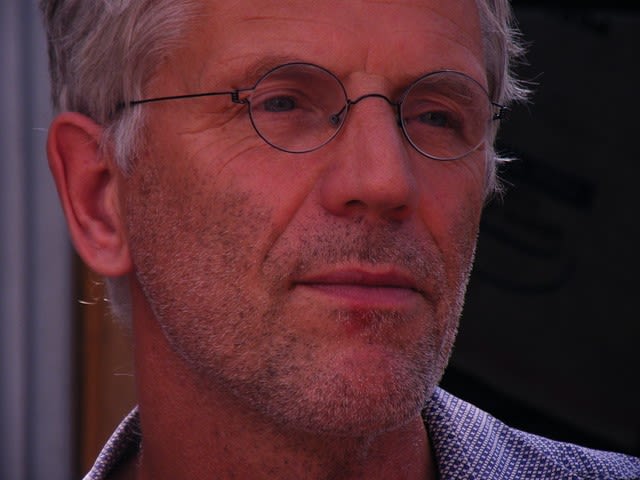
Dutchman Eric de Groot is one of the first Meeting Designers: his pioneering work started in 1992. With his friend and colleague Mike van der Vijver he co-wrote ‘Into the Heart of Meetings’ referred to as the bible of the changing meeting industry. ‘Meetings by Default or by Design’ also co-authored with Mike, intends to help meeting owners to improve their meetings exponentially. ‘From Audience to Contribience’ is Eric’s design motto.

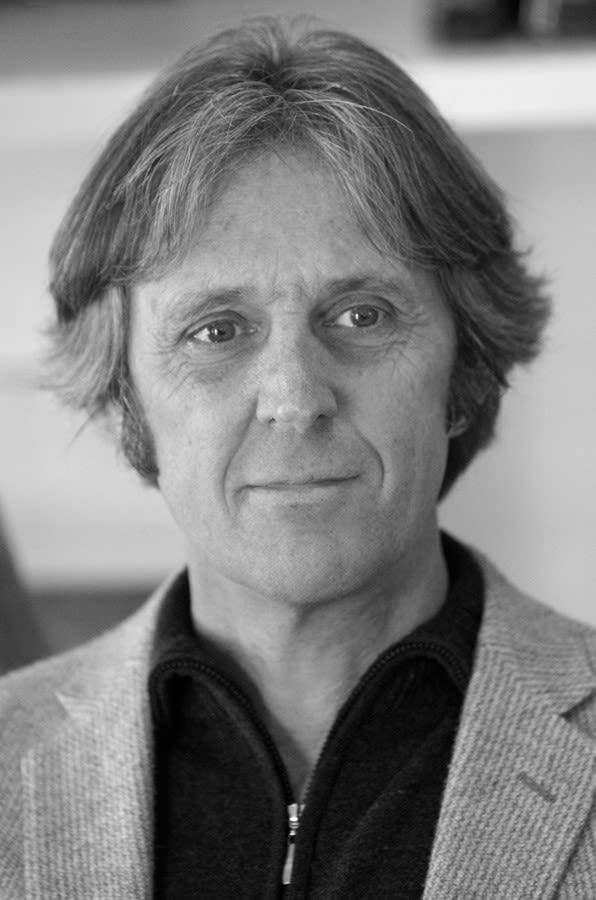
Mike van der Vijver is a meeting designer, facilitator, moderator, and intercultural management advisor. He has been for over 20 years. Together with Eric de Groot, he wrote two books on Meeting Design: Into the Heart of Meetings and Meetings, by Default or by Design.
 Built with Shorthand