
How learning a craft can boost your delegate experience
Sally Trelford was bowled over by traditional Japanese crafts on a recent trip to Tokyo - here she explains why they make a great addition to any programme.

“Clear your desk and the space around you. With your feet on the ground, back straight as though a string from the top of your head is pulling you towards the sky, sit a fist distance from your desk. Concentrate on the space below your belly button, relax and slow down.”
You could be forgiven for thinking this was the start of a mindfulness class. But it was in fact a calligraphy session during a busy conference in the heart of Tokyo. “You will be writing from your heart not your fingers or wrist,” continued our Zen-like master of the craft.

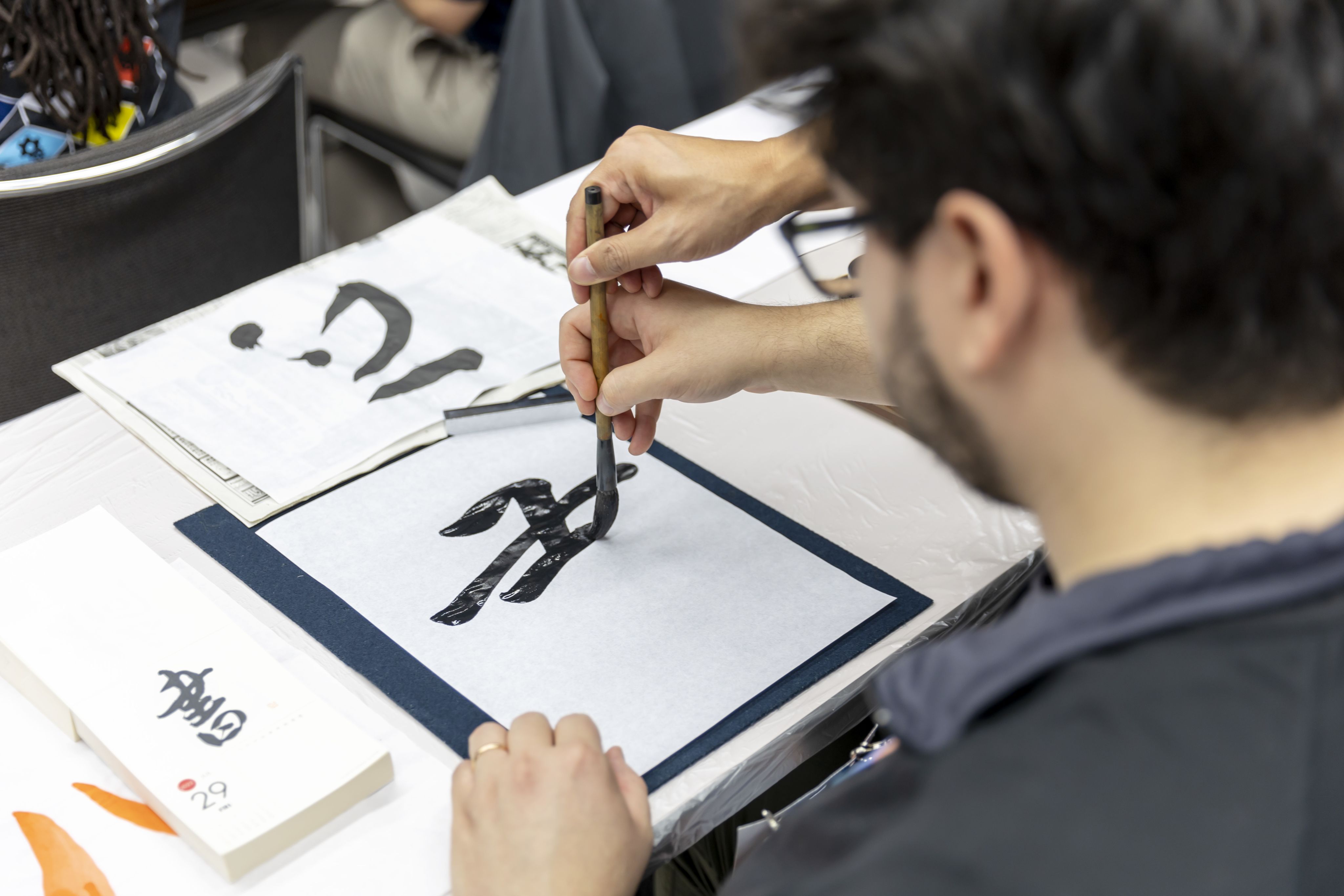


Calligraphy is the art of writing beautiful script and is an ancient tradition in Japan dating back centuries. Famously one of the hardest languages in the world to learn, Japanese contains 2,000 kanji – logographic Chinese characters adapted from Chinese script. And while it can take a Japanese student nine to ten years of study to read and write their mother tongue from memory, the nature of kanji allows a single character to mean a whole word or concept – and this is captivating.
Using brushes, ink and blocks to weigh down the high-quality paper, we were helped to write a kanji with an uplifting message – I chose ‘heart’ although I suspect even an expert may have had trouble deciphering it. The delegates were pleased to be able to take home their lovely designs as a keepsake.
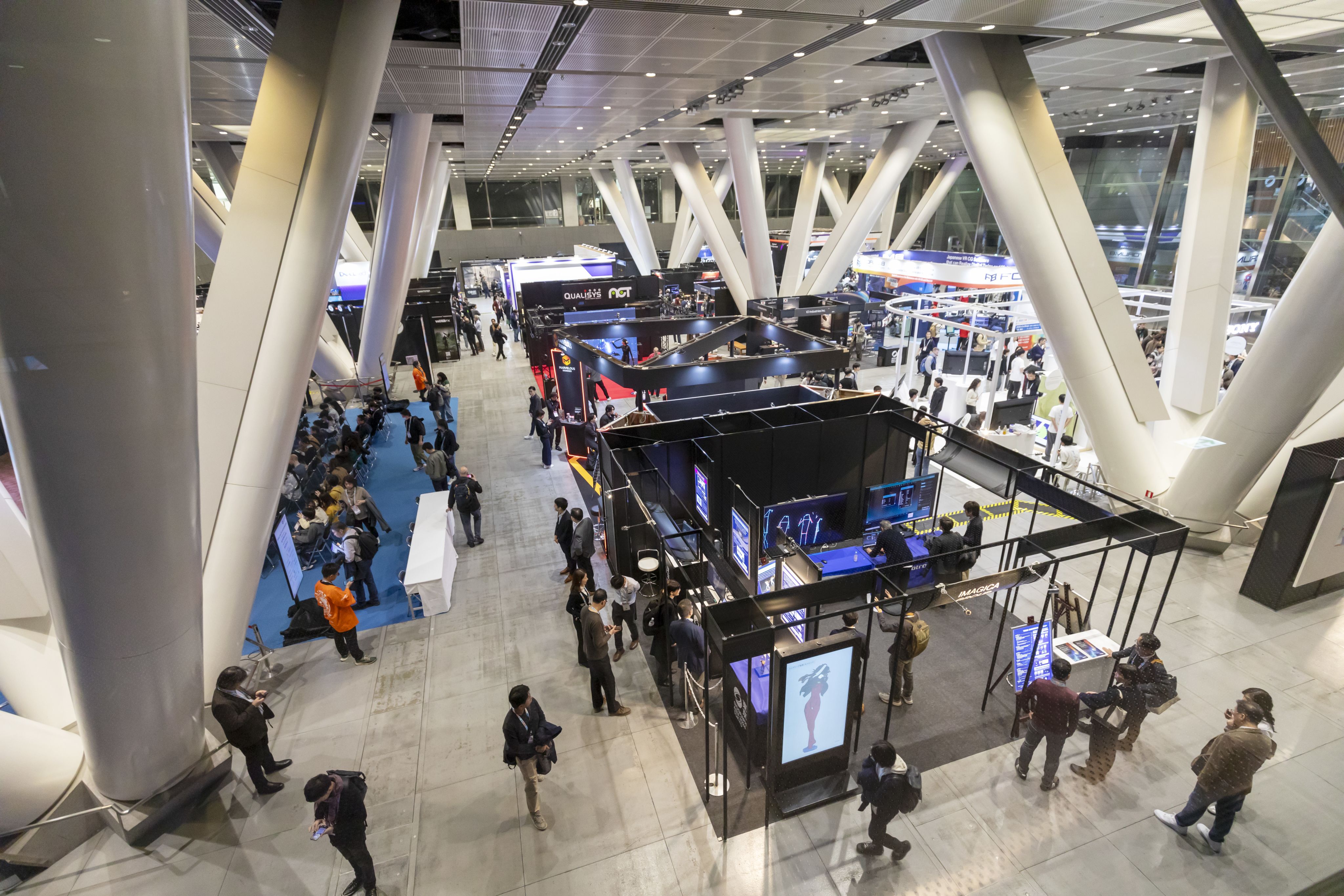
This was one of four cultural sessions provided by the Tokyo Metropolitan Government (TMG) and Tokyo Convention & Visitors Bureau (TCVB) for delegates at SIGGRAPH Asia 2024. Well-attended and popular, they provided a jolting contrast to the cutting-edge advancements in computer graphics and interactive technologies that the 8,500 delegates had come to the city to learn about. But they also epitomise the joy and excitement of visiting Japan, home to the largest city in the world, neon, robots and other high-tech gadgetry as well as peaceful temples, beautiful gardens and a fascinating culture still easily observable despite the fast pace of modern life.
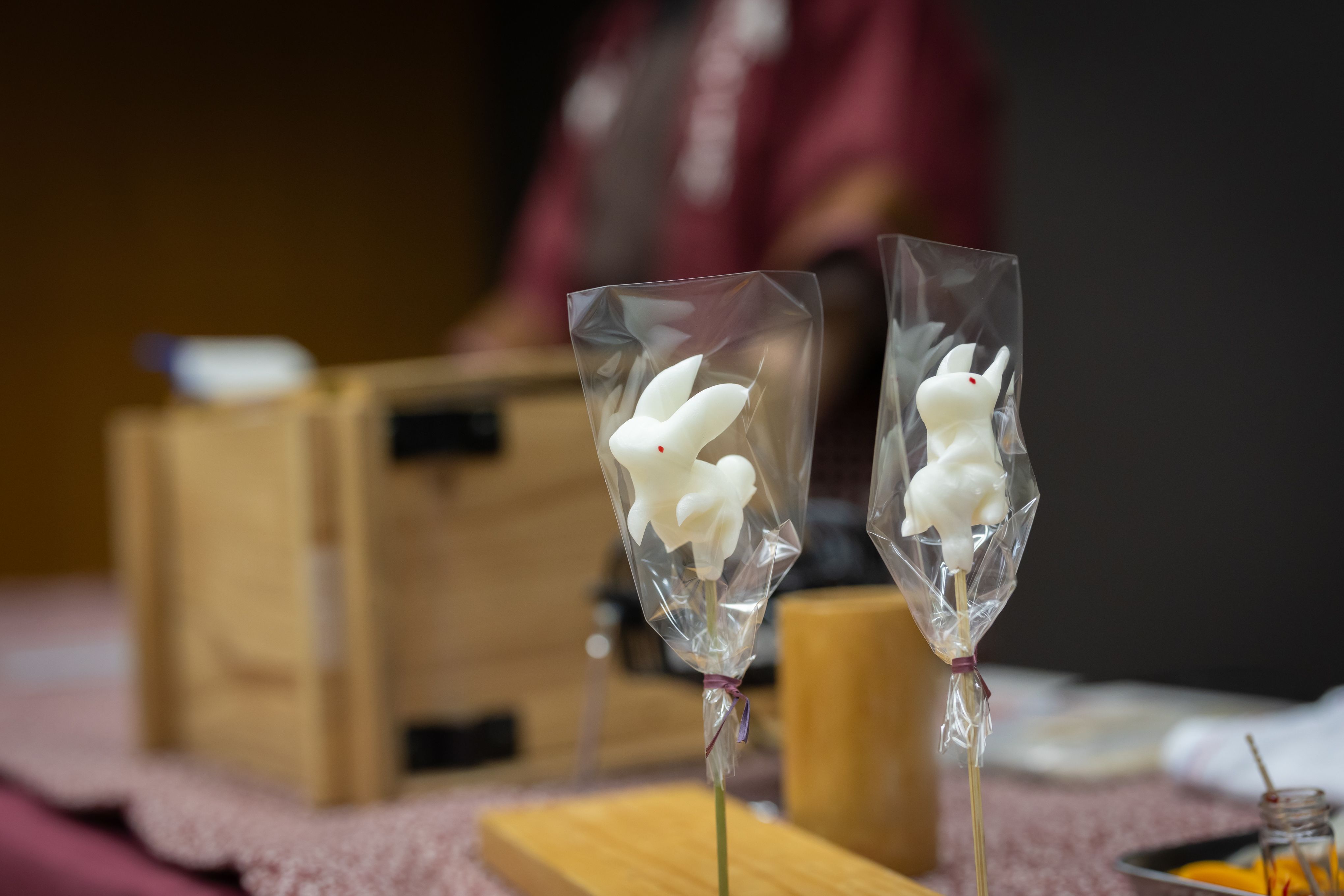
“I love stuff like this,” said San Francisco-based Moshe Barak, from Google, the stand-out performer at the next cultural session. “I came to the last SIGGRAPH in Tokyo and immediately signed up to this activity. Tokyo is a draw and I jumped on it.” It turned out that alongside his digital creativity, Barak is a sculptor, which made him remarkably proficient at Amezaiku, the ancient tradition of sculpting lollipops.
A performance art, Amezaiku artists have long travelled to events and festivals to display their skills. Delegates got to try their hand at producing cute-looking rabbits from hot sugar paste before it hardened. Considerably more difficult than it looked!
A furoshiki session, the art of folding and wrapping, proved equally meditative and calming. Using cloth that can be transformed with a single knot, it is a practice that can be dated back to the Edo period (1603-1868) and teaches participants the ancient Japanese practice of taking care of one’s possessions.
The tea ceremony sessions may be familiar to more of us but still provide a welcome moment of calm and a reminder to focus on the simple but important things in life – like a really good cup of tea. The delicious green tea served here was accompanied by exquisitely designed tiny cakes.
All Japanese treats seem less sweet and much smaller than anything we’re used to in the west. I brought home green tea KitKats for the novelty value, although they proved to be delicious. I was surprised to discover that each one can only be around an eighth of the size of the UK version – which, as it turns out, is roughly proportionate to each nation’s obesity rate.

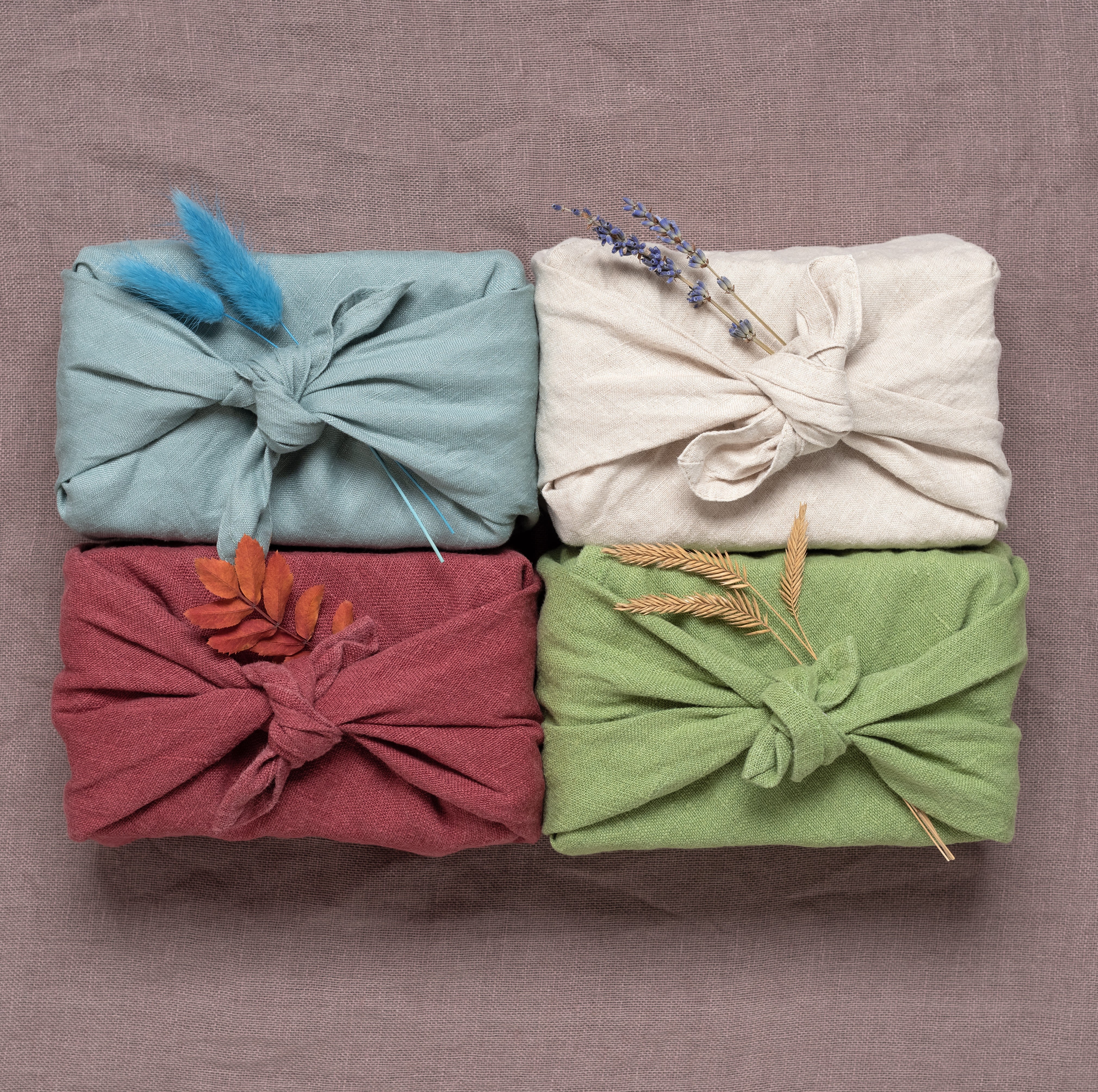
Furoshiki
Furoshiki

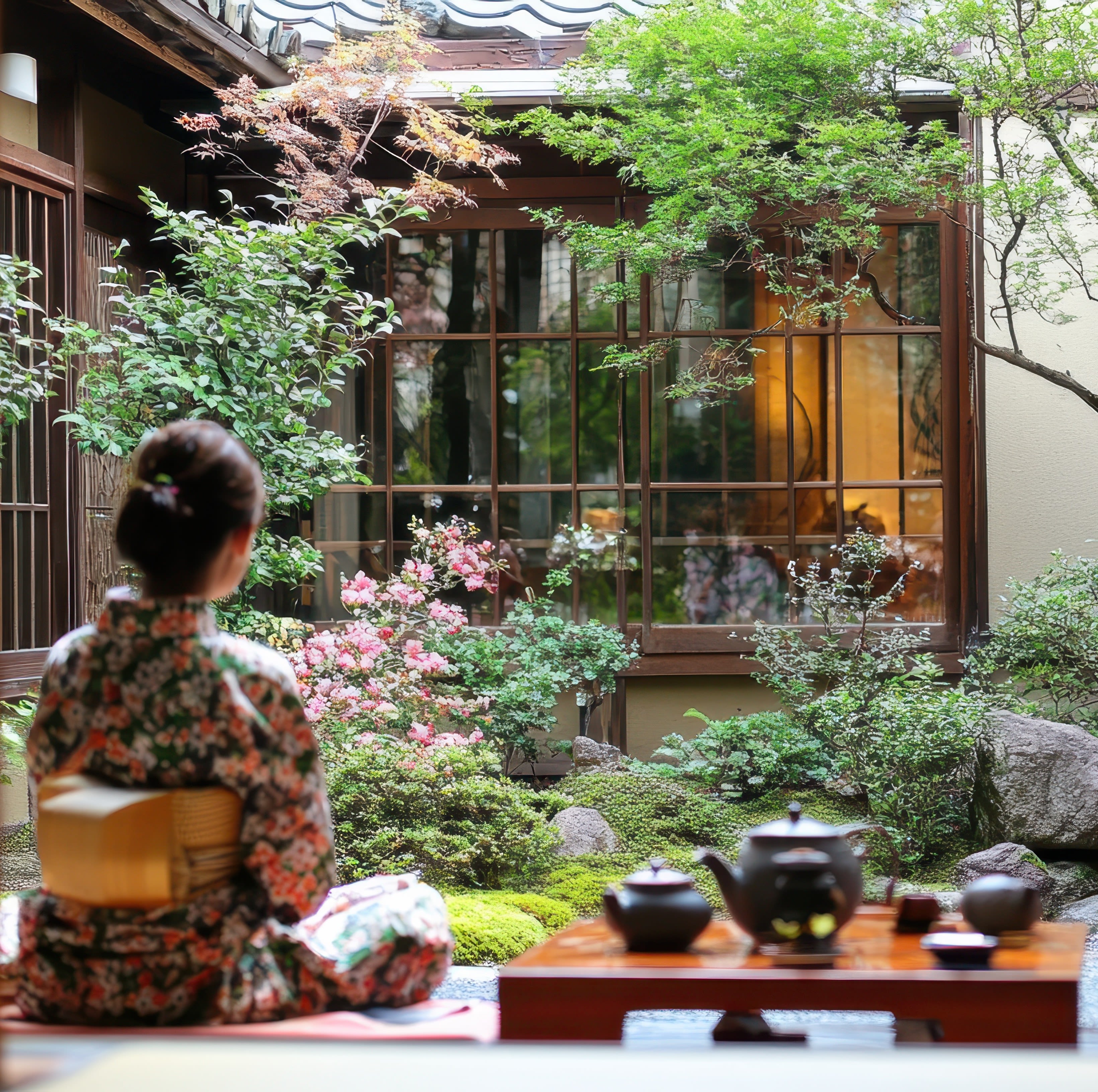
Tea ceremony
Tea ceremony

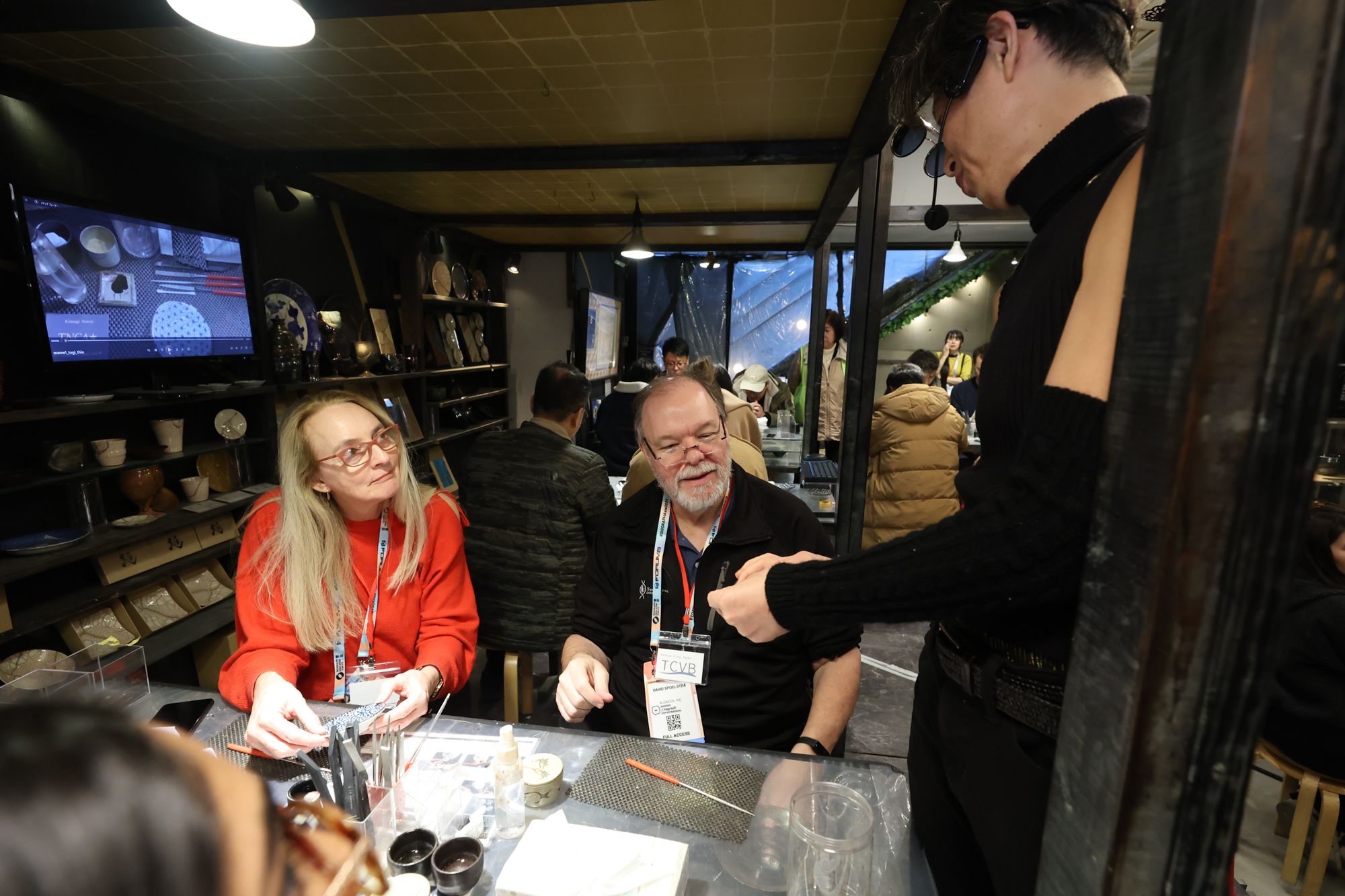


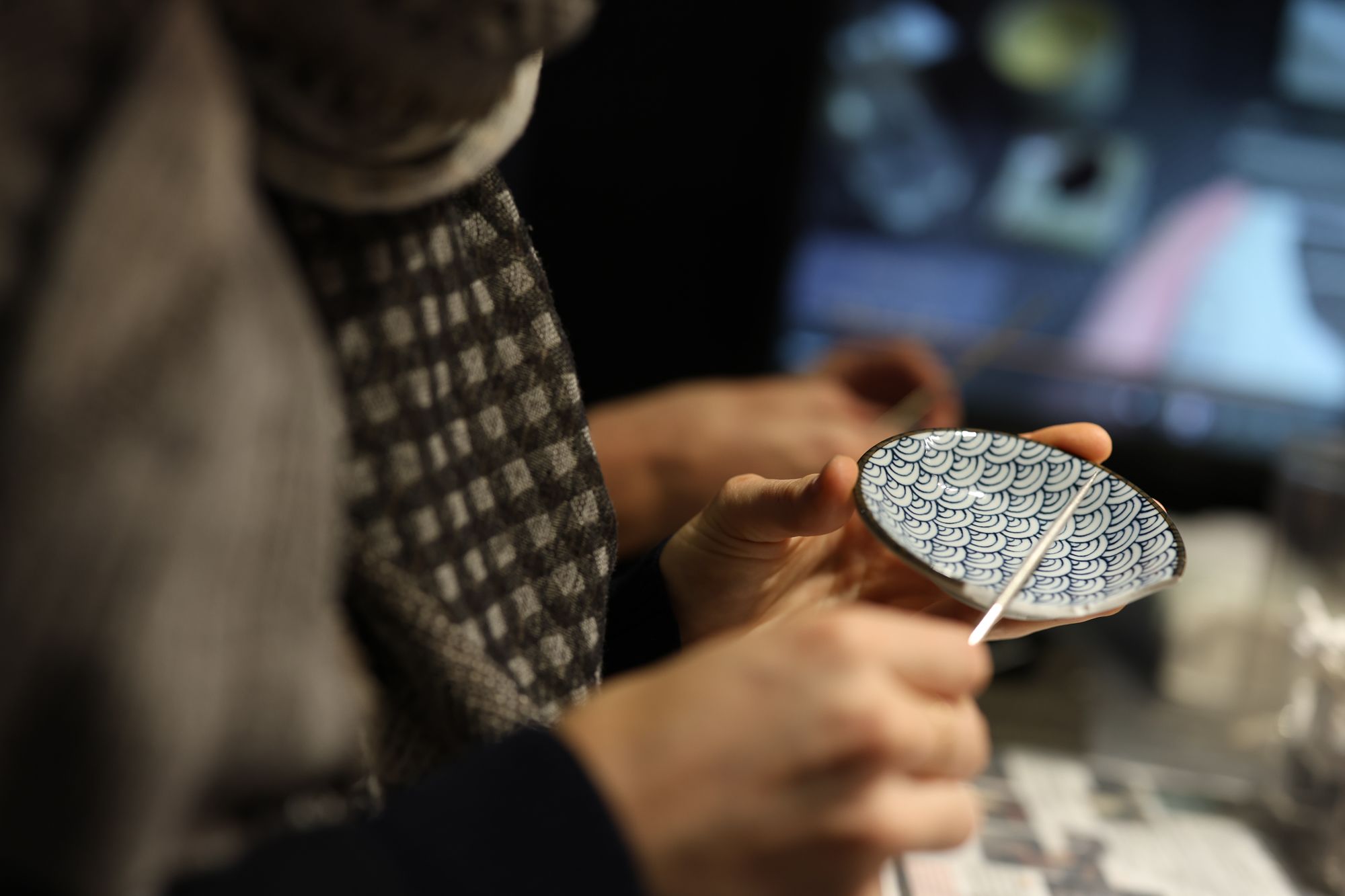
The TMG and TCVB also help to arrange sightseeing tours for delegates and I joined a relaxing river cruise in Tokyo, which culminated in a Kintsugi Experience with a local artist in his studio. Kintsugi is the art of mending broken pottery and increasing its beauty by embracing the imperfection often using gold lacquer. Very popular with the delegates, it also involves patience, focus and an appreciation of the everyday things we often take for granted in our throwaway culture.
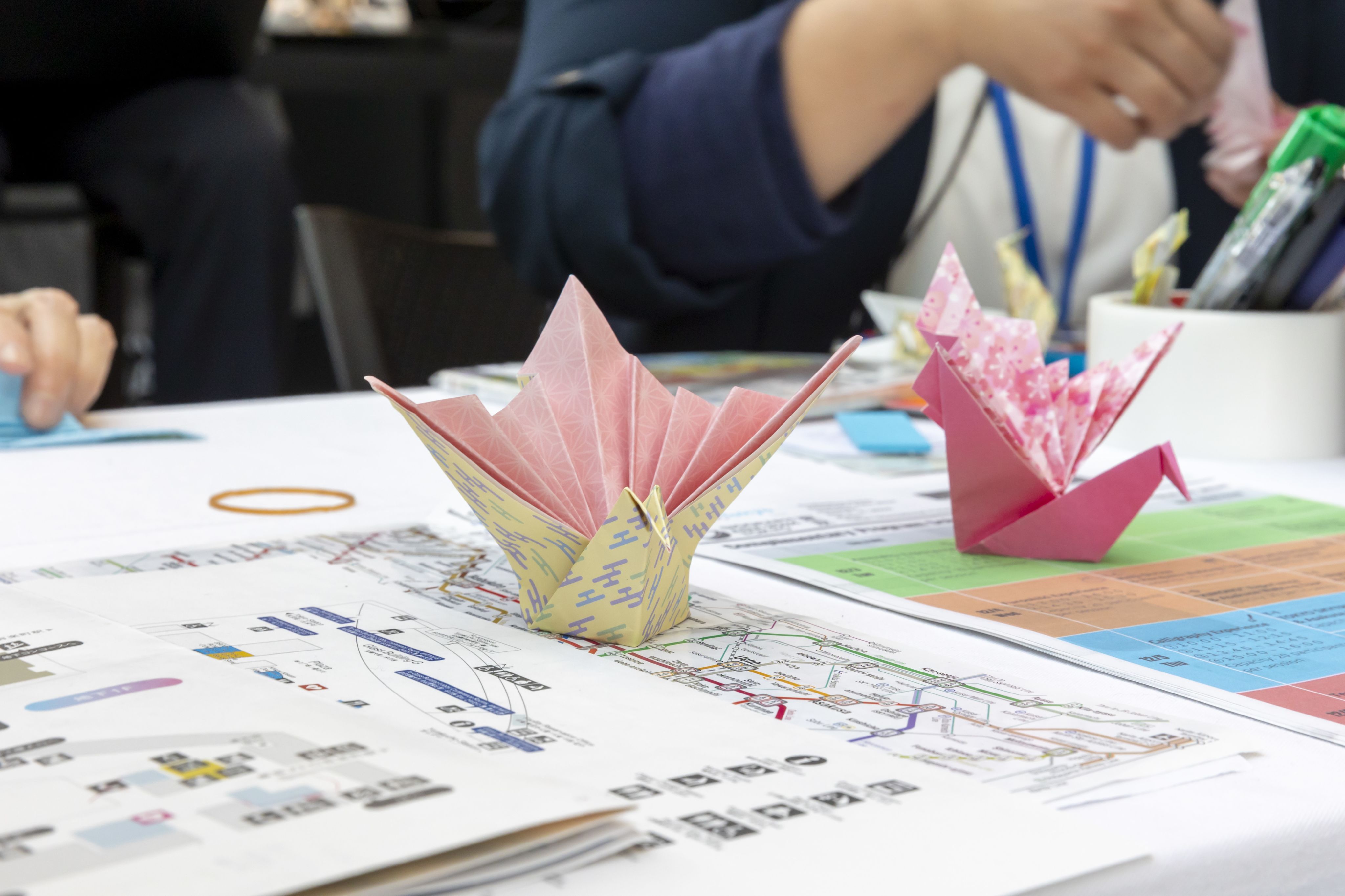
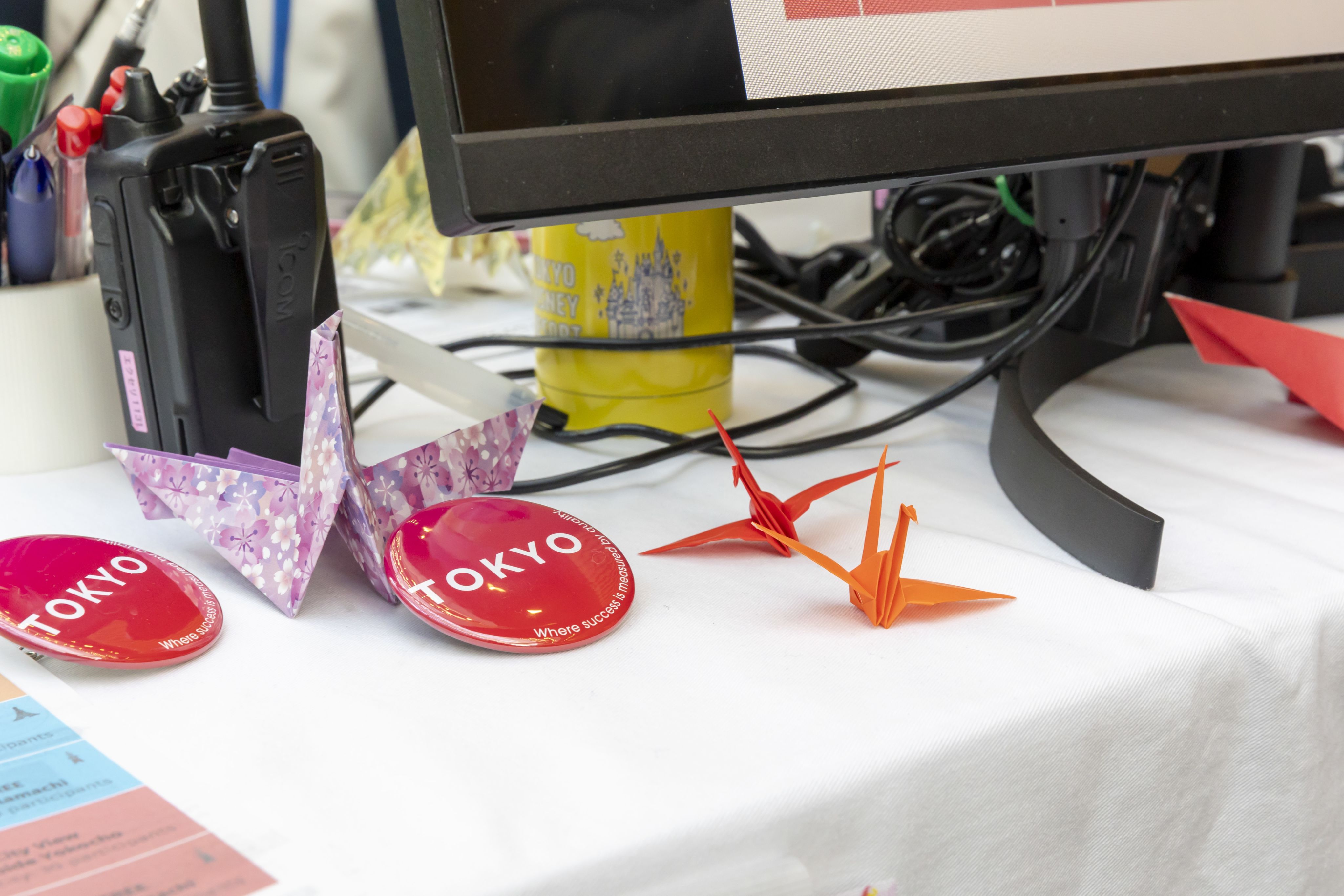
One of the cultural programmes sponsored by the TCVB at Waseda University during the 10th International Congress on Industrial and Applied Mathematics (ICIAM 2023) was on the traditional art of origami. Literally ‘folding paper’, we were taught how to transform a flat square sheet of paper into a finished sculpture by a Waseda graduate and self-confessed ‘train freak’. Following the session and proudly clutching his origami crane, sea bream and Shinkansen – Japan’s famous high-speed train - Reginald McGee, assistant Professor of Maths at the College of the Holy Cross, Massachusetts, said: “I loved it. Not done anything like it since elementary school!”
A public lecture on The Possibilities of Origami: Art, Mathematics and Applications in Engineering provided a fascinating if complicated insight into the mathematical roots of the art and its use in industry. In fact, the logo for ICIAM 2023 was designed using Origami alphabet shapes and, the most famous of all, a crane.
These fun, interesting and surprisingly affecting sessions can be included in any international event at any of Japan’s many cities. Talk to the local convention bureau about their criteria to support or sponsor the sessions. Your delegates will thank you.



 Built with Shorthand