Smile, camera, action!
How the European Association for Osseointegration took its cue from the small screen


A determination to eschew ‘boring webinars’ was the motivating force behind Digital Days - the European Association for Osseointegration’s (EAO) television-inspired virtual congress in October.
The association was originally scheduled to meet in Berlin, but coronavirus restrictions forced a rethink and, after flirting with hybrid, it became obvious that a virtual event was the best option.
It became obvious, too, that simply flipping the existing programme to an online format – a series of streamed presentations or webinars – was too underwhelming a prospect for anyone to support.
“We knew that if we were going to organise an online event it would have to be something totally different,” says EAO executive director Philippe Bregaint, “if not, we wouldn’t do anything. During lockdown our board members were saying, ‘We are fed up with webinars! We have them every two hours!’ so we really did not want to propose to our community yet another boring event.”


Thinking inside the box...


Bregaint and his team eventually hit on the idea of having an evening event scheduled over several days. That might sound risky but, as Bregaint explains, it was about minimising risk.


EAO executive director Philippe Bregaint
EAO executive director Philippe Bregaint
“A lot of our members work in private clinics and there is no way they would have stopped surgery to attend an online congress. So, having an evening programme was not a question of competing with our members’ leisure time but something like the reverse, not competing with their business time.”
Still, expecting people to attend a conference after work is asking a lot. Conscious of that, EAO came up with the idea of transforming the event into something akin to television, with four different ‘channels’, and a series of in-studio debates and interviews with two professional journalists.
“We decided to create a relaxing, entertaining event – still with high scientific content – but easier to follow, and that’s where this idea for the TV format came from. And, because of our members’ work – lots of them deal in dental implants and aesthetics – we knew that it had to look good.”
...having an evening programme was not a question of competing with our members’ leisure time, but not competing with their business time.
Building a taskforce,
choosing a studio...


A small task force made up of six board members and four members of staff was put together and it was unanimously agreed to hire a TV company who could provide the necessary polish.
Because most of the EAO team was based in Paris, they chose Troisième Oeil, a company behind various primetime shows in France who, unlike several communications agencies who also submitted proposals for the event, had an instinctive grasp of EAO’s vision.
“Choosing our partner was a key point for me. Even if we already had in mind the design of the programme, the TV company was able to advise us how long each section should last and help us write different scenarios. Of course, it was also an opportunity for them, too – their industry had been very affected by Covid-19 and they saw that the events industry was a new opportunity.”
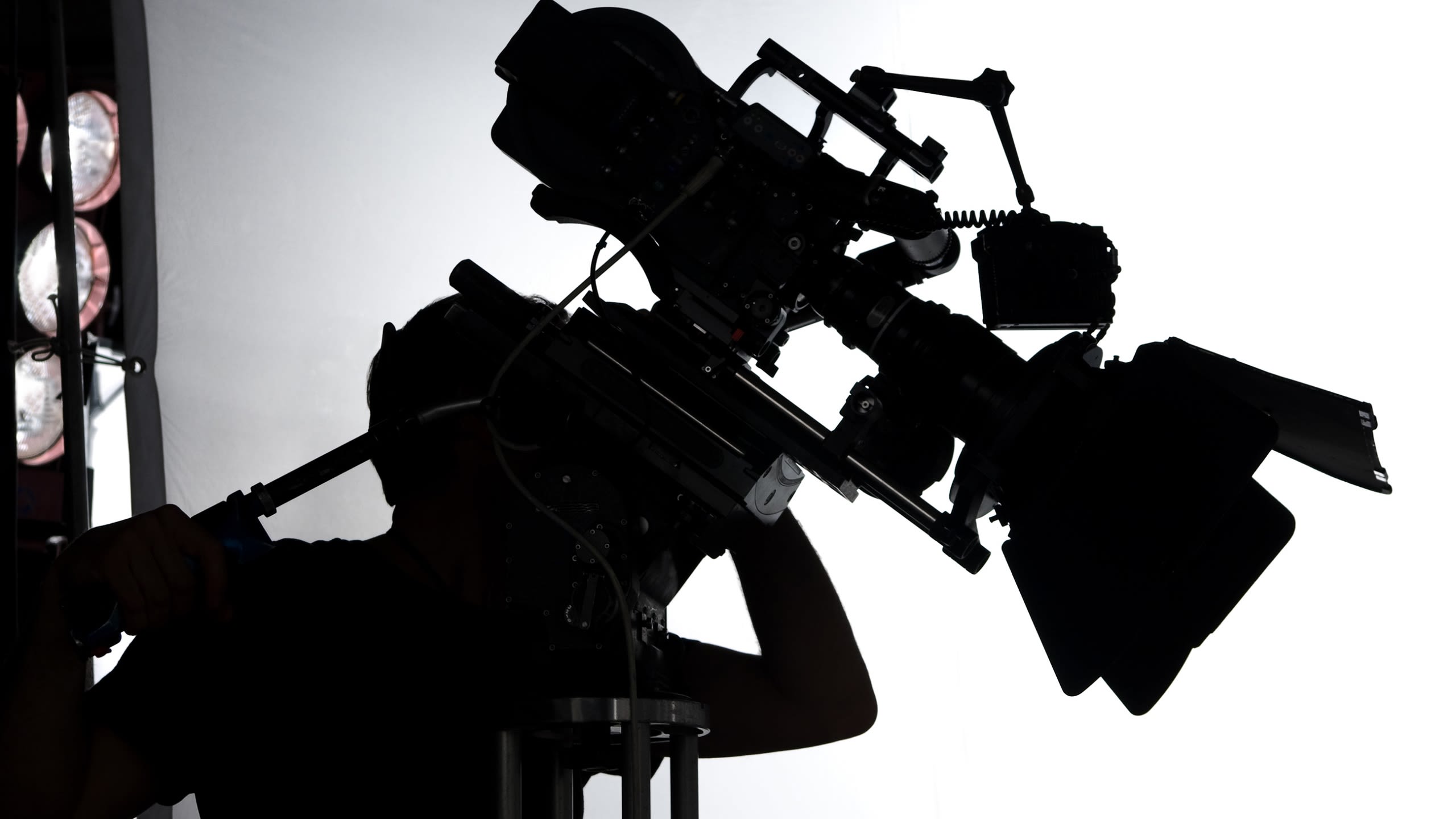
The association hired an iconic television studio in Paris called Studio Gabriel, with around 30 technicians in the back room, and ‘eight or nine’ cameras on stage. It was a ‘huge investment’ – and one which had the potential to backfire if, as looked likely at one point, hardly anyone tuned in!
Delegates usually pay between €300-€400 for one of EAO’s face-to-face meetings and an initial price of around €100 was set for the virtual event. But even this price was acting as a significant deterrent.
“We realised after three or four weeks that we had almost no registrations,” says Bregaint ruefully. “So, we had very long discussions with the board where lots of options were put forward. Some said a price was necessary to give value, but we convinced the board that because this hadn’t been done before it should be done on a purely promotional basis to help raise awareness of our brand.”
Making the event free did the trick. An aggressive social media campaign with short video teasers for each session saw registrations skyrocket to more than 12,000. The geographical spread was astonishing, too, with registrants tracked to more than 150 countries, compared to 80 normally.
Engaging the audience...


To keep their delegates – or ‘viewers’ – engaged with the content they knew they had to keep each session short and create a natural ‘rhythm’ throughout the night that would stop them logging off.
“We have been inspired by the TED Conference, so those lectures which could not be converted into debates or interviews were made very short – 15 minutes maximum. And that was a real challenge actually – getting speakers to reduce a lecture that was supposed to be 30 minutes into a 15-minute slot.”
There was, he says, ‘resistance’ from the speakers, who understood the objective and the concept of the event but found it very difficult to get out of their comfort zones.
“For those lectures that we converted into a TV debate format we had lots of preparation, an Editor-in-Chief who was writing all the scenarios of the conversation, where we would incorporate video, but for all the debates, most of the speakers arrived in the studios with the slides they had produced for the original lectures! Of course, I understand. This was very different for them - and not being able to control the slides themselves, to have the remote in their hand, must have felt strange.”


Despite this fear of the new, the event proved a huge success, attracting more than 6,000 viewers, almost double the number of delegates that typically attends the in-person event. Pleasingly most of those 6,000 viewers logged on for at least two hours per visit (each evening show lasted four – four-and-a-half hours) and most tuned in for at least two of the four evenings on offer.
But there were other challenge along the way.


Operational difficulties...

In September the COVID situation was quite dramatic – the numbers were going up and up every day.
For starters, the association had to get used to doing things on TV production time.
“We were used to starting speaker preparations months in advance,” says Bregaint, “but for TV production teams, the preparation time is only a few weeks and that was quite a surprise for us! Everything was left until two or three weeks at the beginning of September.”


It didn’t help that the health crisis was spiralling out of control again.
As Bregaint recalls: “In September the COVID situation was quite dramatic – the numbers were going up and up every day. In the beginning we thought every speaker would be happy to come into the studio in Paris to record their interviews or debates live, but every day we had cancellations. They didn’t want to travel to France, their universities wouldn’t let them or whoever.
“So, we thought we will record everything in Switzerland. But then Switzerland closed its borders, so we had to find a studio in Germany. For the debates we wanted all the experts to be gathered in a studio, so we had to look for somewhere everywhere was comfortable. In the end we had some speakers recording in Milan, others in Paris, and some in Hamburg, and we were doing this in the last week!”
It may have been nerve-wracking, but Bregaint is clearly proud of what his team achieved: “It was fantastic really - so much energy to arrange everything and make it happen! I was amazed.”
Keeping the sponsors happy...


Besides losing income on delegate fees, convincing sponsors to part with their money was another huge challenge. Again, fear of the unknown was the main stumbling block.
“Our sponsors were really afraid because we had never done it before, but luckily 99 per cent of our sponsors for Berlin already paid their deposit, so we were able to suggest that they transfer a part of that deposit to Digital Days at a cost for an e-stand of €2,500 compared to €10,000 for a face-to-face meeting Still, it was very difficult because we had nothing to show, nothing to prove that we could do it, we just had to try to explain what we were doing on the telephone.”
They could show, however, that they had already made successful inroads into the digital realm.
“Our digital activity on YouTube and Facebook and other digital channels has been incredible over the last two years, so we could explain that if we have been able to go from almost zero to a very high level of engagement digitally, we could do something interesting in terms of our event. However, in the end less than a third of our sponsors jumped over.”
This reticence from sponsors affected how the show was produced. To maximise visibility sponsors were offered the chance to host symposia either side of the main programmes. Whilst given the option to have TV-interview style symposia, most chose the traditional lecture format with presenters standing behind a lectern, which, according to Bregaint was ‘very surprising’.
“We tried to convince them that they could do something different, but they were scared. I think when they saw the other TV-interviews we did for the show they knew they had missed a real opportunity. They got great numbers – about a thousand people in each symposium, compared to 500 normally and that is the main thing - but I think next time they will be more adventurous!”
And he is determined there will be a next time.
“We can’t ignore the fact that we had 12,000 registrants and 75 per cent of them were totally new to us or that our members only accounted for 50 per cent of the people who used the platform. We were attracting people who weren’t previously even aware of our organisation, and this is a huge argument to take to our sponsors – that you can see people face to face on a regular basis, but we have a certain profile of people who are joining us digitally. We can attract two different audiences.”
Bregaint likes the idea of having a face-to-face event as normal and then perhaps a slimmed down Digital Days in the evening. This would be less a hybrid event as a ‘both’ event - live and virtual.
He concludes: “Now we can prove that we have done something different and I am sure that people will be willing to participate and will not be afraid to join us and even pay for a digital event especially the sponsors. We learnt that we could do something different and attract a totally new audience and that a digital event could bring something for our community and our sponsors.”
 Built with Shorthand