


A bigger bang
James Lancaster explores a small Flemish city with star quality…
George Lemaitre was a Catholic priest and physicist whose discoveries laid the foundations for what became known as the Big Bang Theory. I point this out only because until recently I’d never heard of him. Having initially dismissed Lemaitre's account of an expanding universe, Einstein eventually came round to the idea and the two cosmologists became friends and correspondents. Unlike Einstein, however, Lemaitre’s name has largely been lost to history.
I’m being shown around Leuven, in Dutch speaking Belgium, where Lemaitre was professor of physics, and pondering how, like our celestial clergyman, this charming university city could have escaped my attention for so long. I’m with a group of association meeting planners on a tour organised by the convention bureau, and the murmurs of approval suggest my companions are thinking along the same lines. Given the city is only a 15-minute train journey from Brussels, its relative obscurity is clearly something of a mystery.
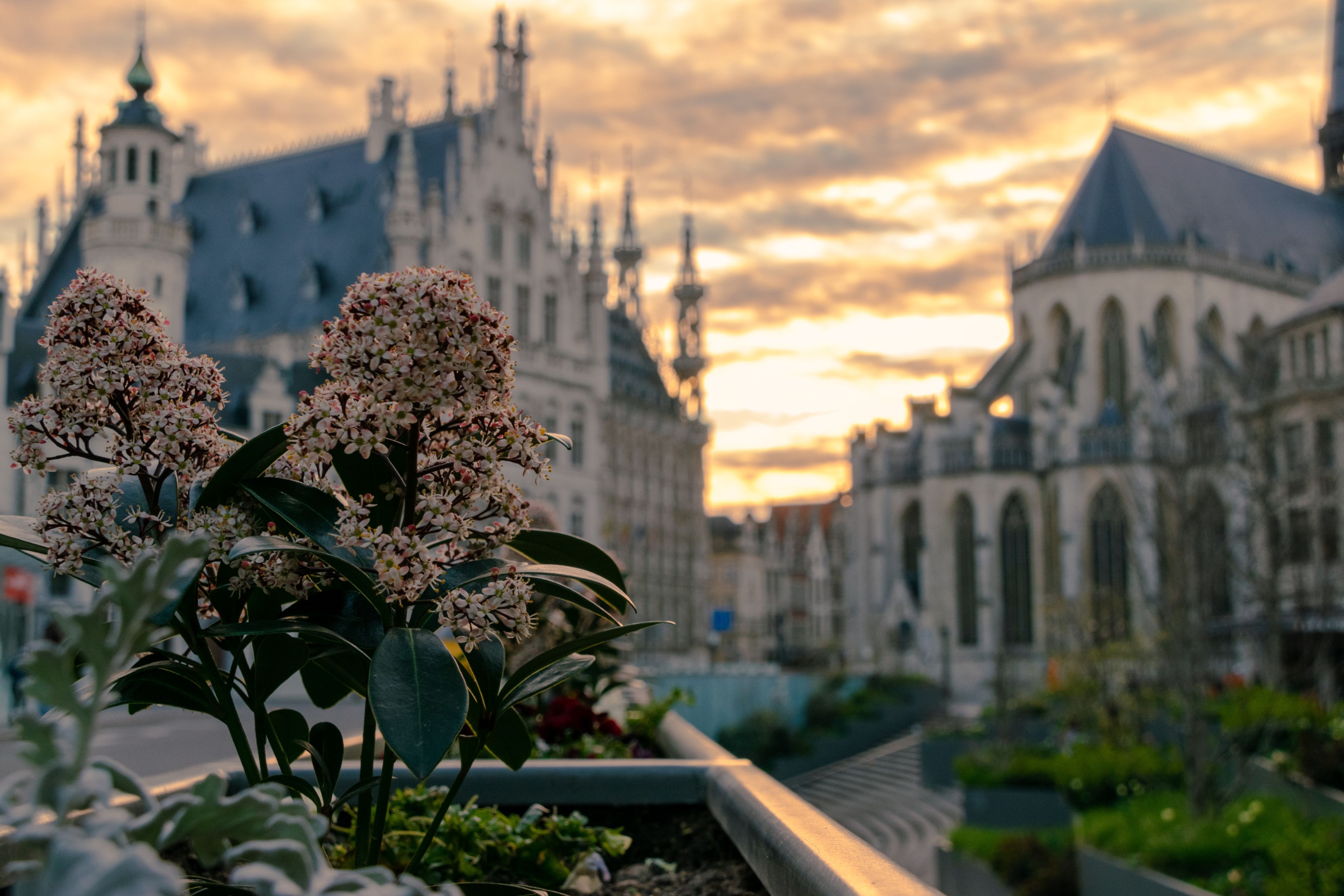
We’ve come to a stop outside the 15th century Town Hall, a Gothic masterpiece that, along with St Peters Church and the University Library and Tower, is one of the city’s architectural treasures. In the 19th century, 236 statues were added to the exterior, each representing a local scholar, artist or noble, and because the streets in Leuven’s historic centre are pedestrianised, we can spend as much time as we like trying to count them. In fact, the prioritising of people over cars (cycling is also very popular here) is one of the first things you notice about Leuven. It is a ‘walkable city’ that encourages visitors to walk. Wherever you plan to hold your gala dinner or social functions, the journey from one of the city’s meeting venues should be manageable on foot. If not, there’s an excellent bus service.
KU Leuven is the oldest and biggest university in Belgium with more than 58,000 students. To put that in context, the city’s resident population is only 100,000. Campus is scattered throughout the city, which, curiously, means the weight of learning and history never becomes overbearing. The large student population adds a levity and cool edge to the city, which might otherwise feel a little stuffy and claustrophobic. The university – and its various affiliated research hubs and institutions – also provides a wealth of resources for meeting planners who might need an expert speaker or an educational offsite tour to enrich their conference programme.

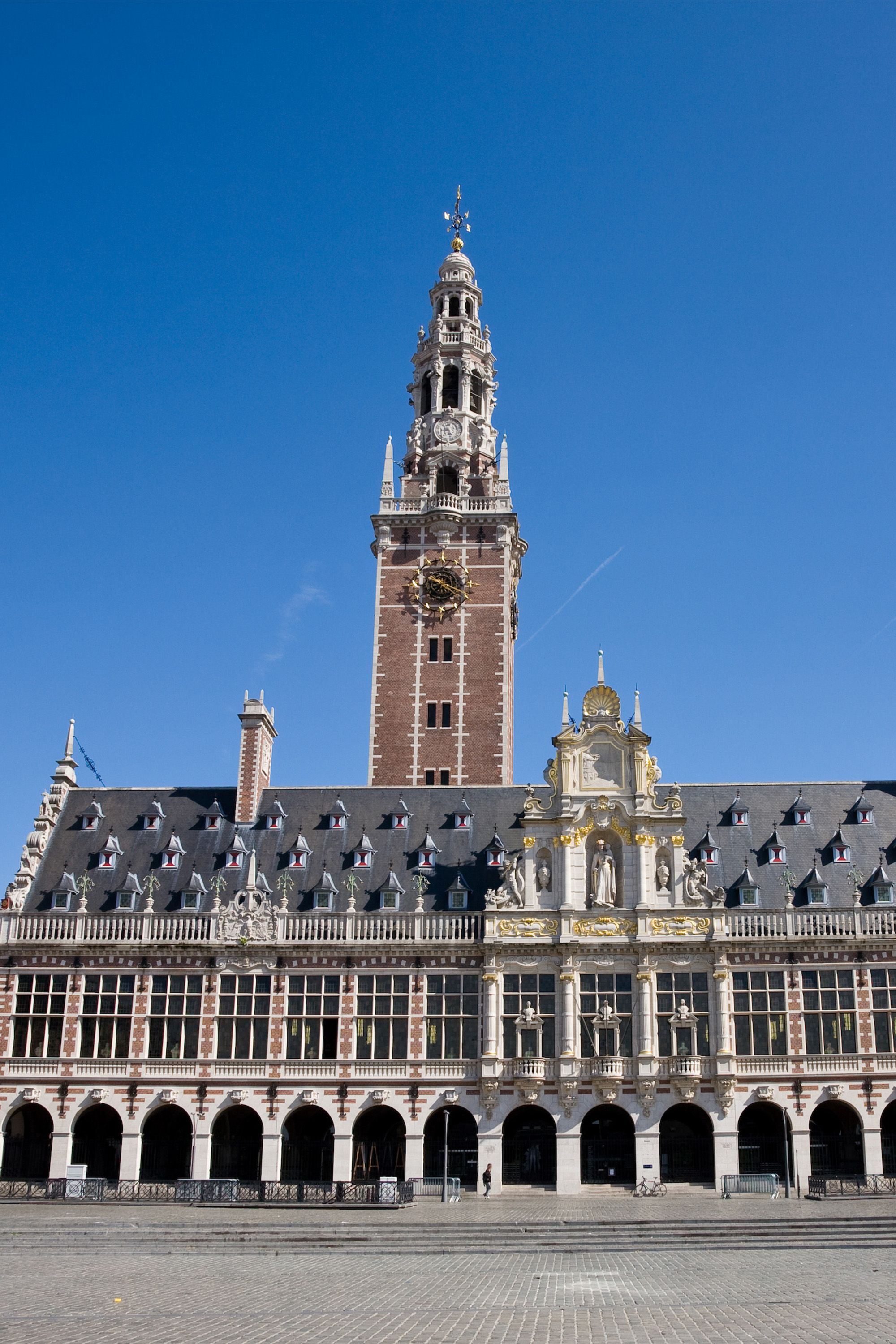
Library and Tower (Adobe Stock)
Library and Tower (Pic credit: Eli Franssens)
Associations in the field of medicine might take their delegates on a tour of Health House, which offers an immersive array of exhibits and displays explaining how technology is going to transform healthcare. If this digitalised future looks a little scary - the role of Artificial Intelligence could be very helpful or very intrusive depending on your point of view - then what is being achieved right now, with 3D printers for example, is truly eye-opening. Our group was most fascinated by the digital autopsy table, which puts a very literal spin on the idea of ‘donating your body to science’. The city’s university hospital employs 9,000 people and has 1,300 researchers.
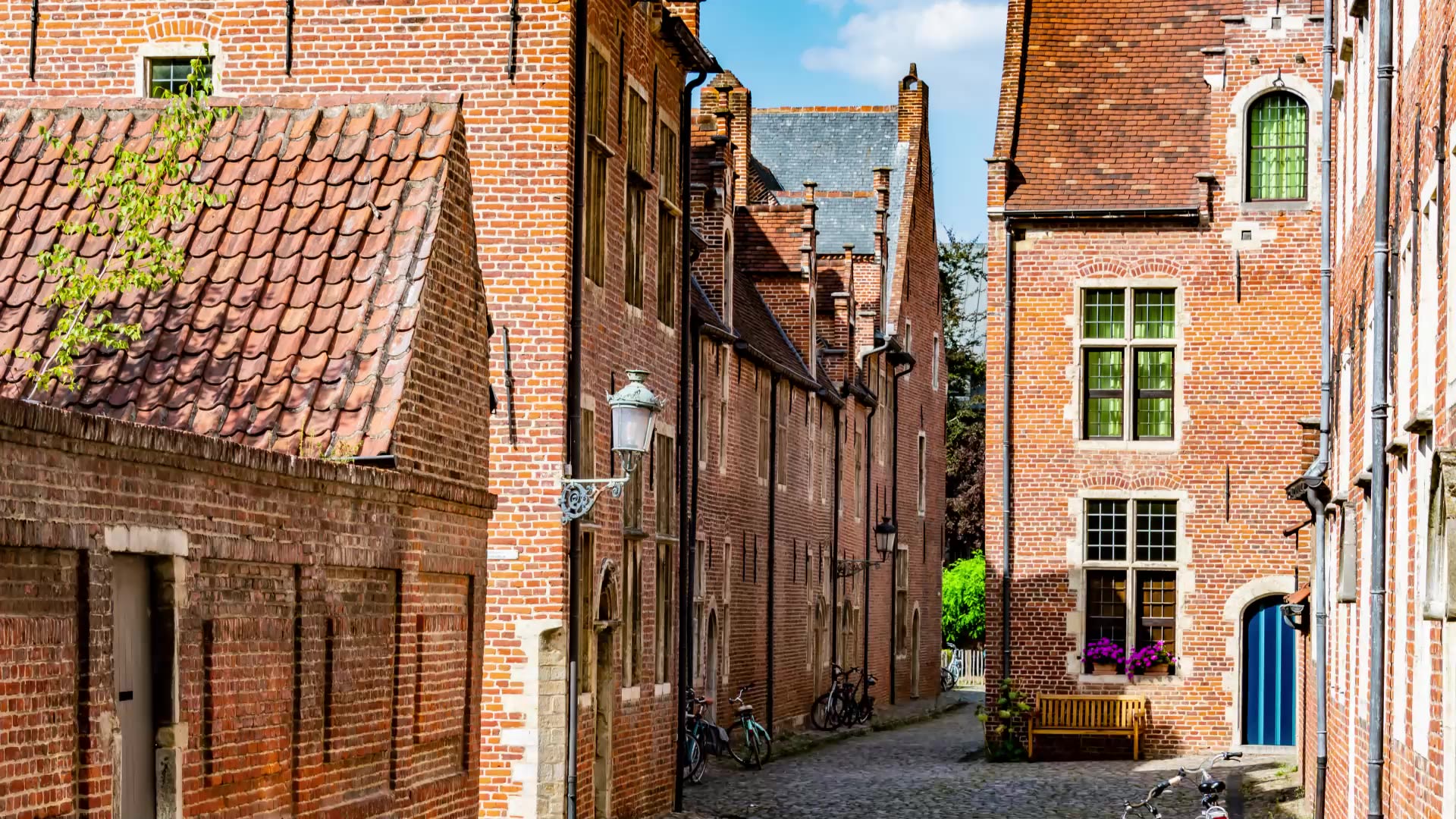
There is an invigorating tension in Leuven between past and future. For while parts of the city – especially the exquisitely well-preserved Great Beguinage – make you feel as though you’re walking back in time, Leuven is a city that has always explored the frontiers of science. A contemporary example of this is IMEC, an international research and development hub focused on nanotechnology, AI, and semi-conductors, which has links to 5,500 experts from 96 countries, 600 industry partners, and a global network of academics.
Because of its size – Leuven has around 1,000 hotel rooms – the city attracts smaller international associations meetings, and it is attracting them in growing numbers. Last year it hosted more international association meetings than any other city in Belgium, besides Brussels. Leuven has seen steady growth as a convention destination since 2018, thanks in part to the creation of the Leuven Convention Bureau, a collaboration between KU Leuven and City of Leuven. Since 2019, Leuven has risen 55 places in the ICCA City Rankings. Between now and the end of the year, the city will host The International Society for Advancement of Respiratory Psychophysiology, The International Group of Ex Libris Users, the European Association of Japanese Resource Specialists, and the European Assertive Outreach Foundation, among others.
Prof. Wim Desmet, general administrator of KU Leuven explains why hosting association meetings is so important to Leuven.
“International multi-day congresses are an excellent opportunity for KU Leuven and Leuven to raise our profile as a 'hub of knowledge and innovation,' further building the image of the city and the university together with its many partners. Our joint efforts are bearing fruit.”
We can’t leave without sampling the beer. While the city has made efforts to raise the profile of Lemaitre (in 2021 it hosted BANG! - a citywide festival dedicated to the big bang) another of Leuven's home-grown stars needs no introduction - lager giant Stella Artois, whose original brewery on the edge of the city, has become a trendy, post-industrial heritage venue, with an assortment of event spaces. It’s not clear what the locals think of the brewing behemoth but the artisanal brewers who have made Belgium world famous for its beers tend to crinkle their faces in mock disgust whenever the S word is mentioned. Fortunately, we get to sample plenty of the ‘real stuff’ courtesy of local brewer De Coureur.
And, yes, it’s delicious.
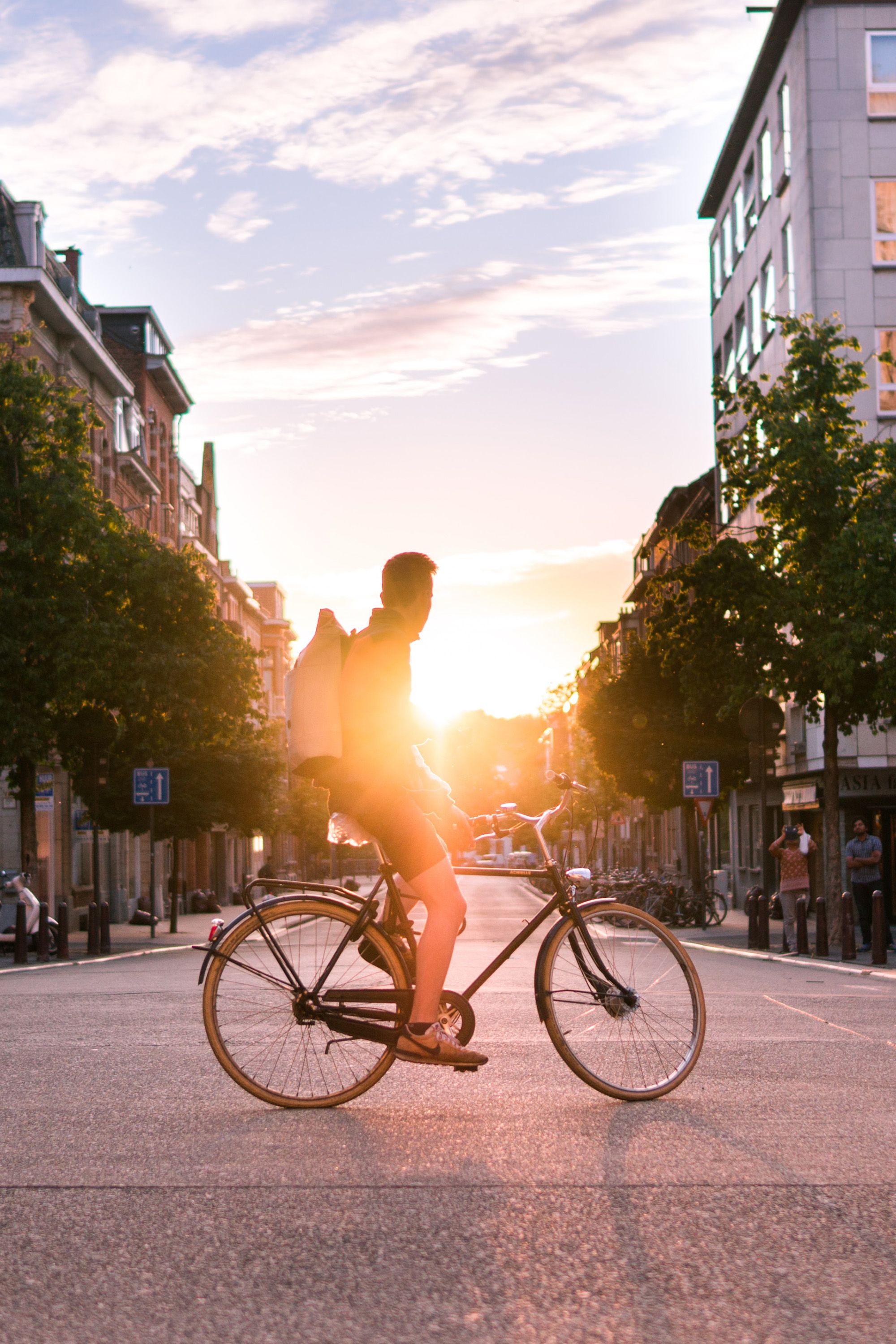
Cycling in Leuven, Belgium (Tobias Cornille on Unsplash)
Cycling in Leuven, Belgium (Pic credit: Tobias Cornille)
“International congresses are an excellent opportunity for KU Leuven and Leuven to raise our profile as a 'hub of knowledge and innovation,' further building the image of the city and the university together with its many partners. Our joint efforts are bearing fruit."
Prof. Wim Desmet, general administrator of KU Leuven

Places to meet:
- Total floorspace 6,000sqm
- Main hall seats 3,500 pax theatre-style
- Seven additional meeting spaces 50-700 pax
- Outside city centre – easily accessible by public transport
- Former 17th Century Augustinian Convent
- 103 spacious and stylish rooms
- Various meeting rooms (146 pax theatre-style).
- Charming heritage venue in the historic beguinage
- Versatile event spaces accommodate 250 pax.
- High-tech AV for seminars and multi-day conferences
- Five multi-purpose spaces suitable for different types of events (200 pax).
- A central courtyard garden and a roof terrace (garden 800 pax).
- Events can be combined with a visit to the museum.
- Beautifully renovated residential conference venue
- 56 accommodation rooms
- Six conference rooms (20-112 pax theatre-style)
- Auditorium (223 pax theatre-style)
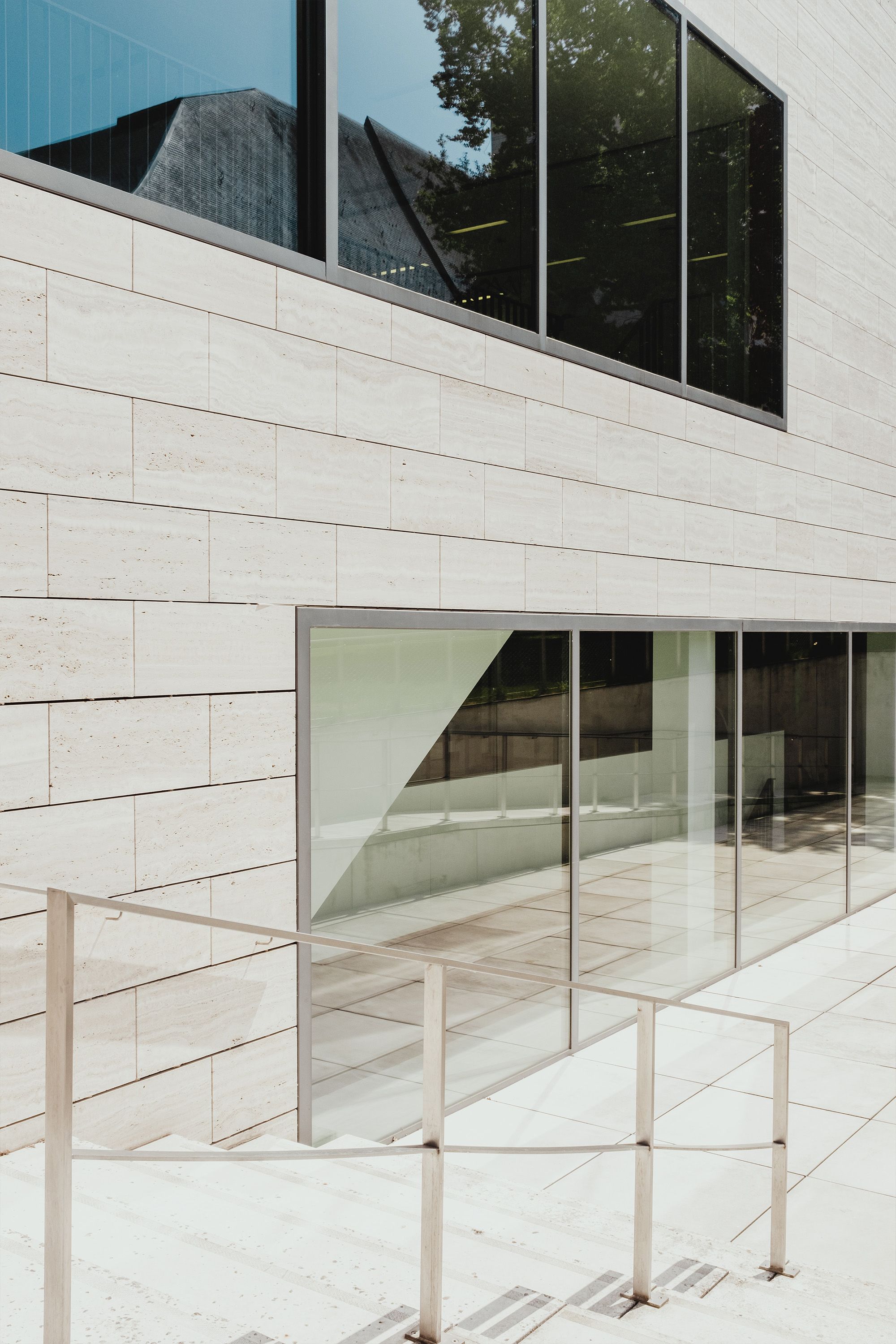
M-Museum Leuven, Leuven, Belgium (Pic credit: Bernard Hermant)
M-Museum Leuven, Leuven, Belgium (Pic credit: Bernard Hermant)


 Built with Shorthand