


The little metropolis
James Lancaster visits Antwerp, a city with a rich history and a bright future ...

In one of the gloomy, atmosphere-soaked rooms of the Plantin-Moretus Museum, in Antwerp, I found myself peering into a glass cabinet at a copy of Abraham Ortelius’ Theatre Orbis Terrarum, widely held to be the world’s first modern atlas. The book was opened on a finely drawn map of the world and, just for a moment, the rich history of the city I was in - a history that had been swirling around my head in fragments – seemed to cohere around something I could (almost) touch.
The 16th century was a ‘golden age’ for Antwerp. Ortelius, a cartographer and book dealer, and Christophe Plantin, founder of one of the most famous publishing houses in the world at that time, were among a cast of deeply impressive figures – the Baroque painter Rubens chief amongst them – who helped to put this Flemish seaport on the international stage.
Back then it was the commercial heart of Europe – home to the first stock exchange - with more than 40 per cent of world trade passing through its ports. And although Antwerp’s star faded in the following centuries, it still has the confident air of a city that knows its place in the great scheme of things – a pocket-sized metropolis of 536,000 people and 173 nationalities.
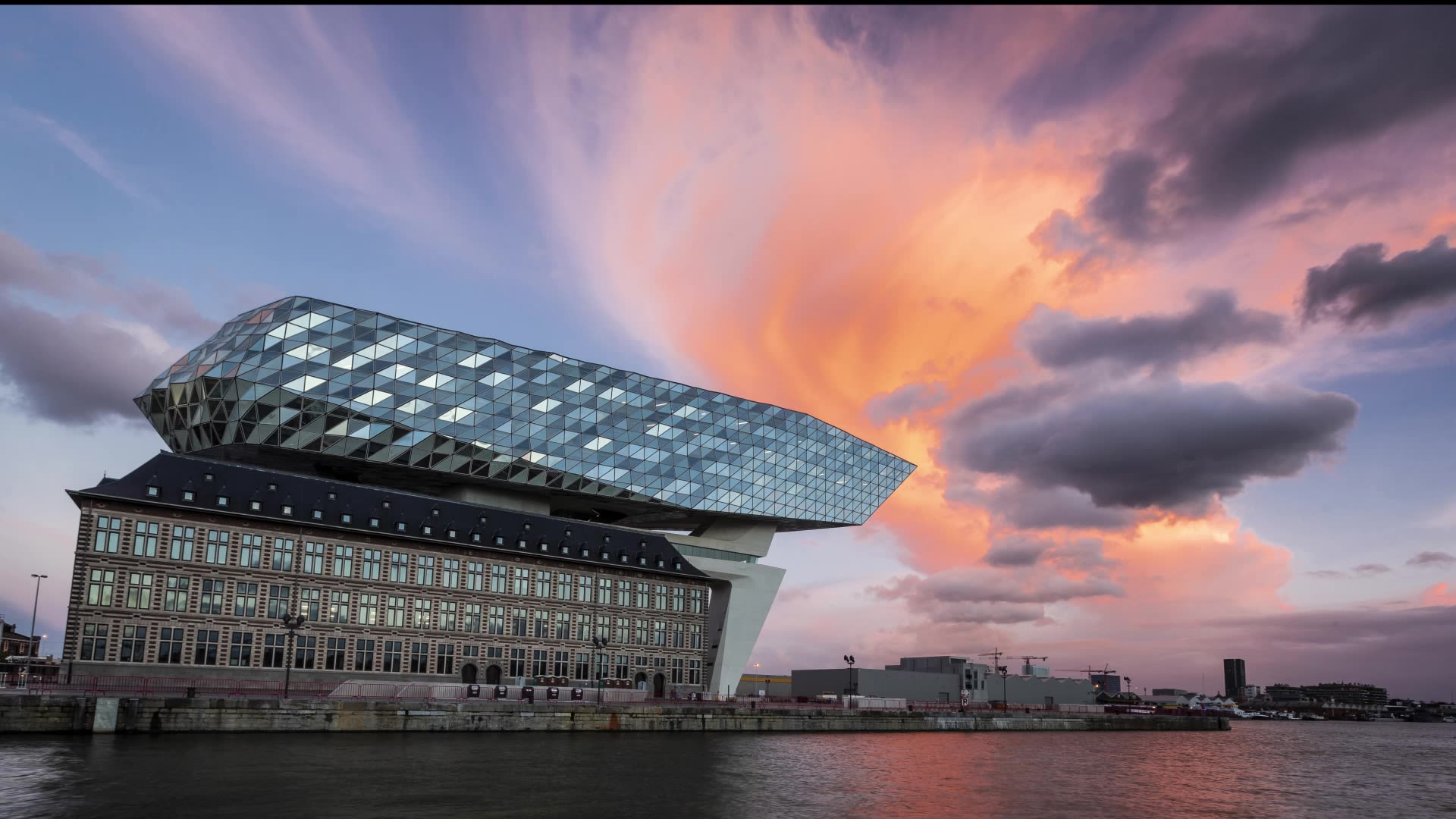
But if you were to limit yourself to the historic centre, with its decorated guild halls, magnificent gothic cathedral, and the odd touch of neo-classical, you would see only one side of this truly multifaceted city.
The port – the second largest in Europe after Rotterdam – still plays a vital role in world commerce, trading 86 per cent of the world’s rough diamonds and storing half the world’s shipped coffee beans, for example. It is also home to the second largest petrochemical cluster, now seemingly powered by a vast array of wind turbines. Elsewhere, the city, home to 50,000 students, has forged a reputation for itself as an unlikely rival to Paris and Milan in the fashion stakes.
Antwerp, then, has always been an outward looking city, connecting people and places. But for those who live there, getting around it has become more vexing, as the city spills beyond its semi-circular ‘ring road’. To fix the problem the government of Flanders is ploughing billions into an upgrade, which will not only complete the circle, but create huge new parks and green spaces. A significant part of the Oosterweel project involves tunnelling under the River Scheldt - and it is largely for this reason that Antwerp will be hosting the World Tunnel Congress in 2027.
International meetings and events are one of the ways Antwerp is bringing people together and showcasing its spheres of expertise today. Johan Mignon, president of the Belgium Tunnel Association who, with the help of Antwerp Convention Bureau, created the winning bid for the congress, explained how - come 2027 - the tunnel under the Scheldt would be built, but not yet open to traffic. All things going to plan, this should allow for an extraordinary site visit where delegates will have the chance to walk beneath the river and inspect the project at close quarters.

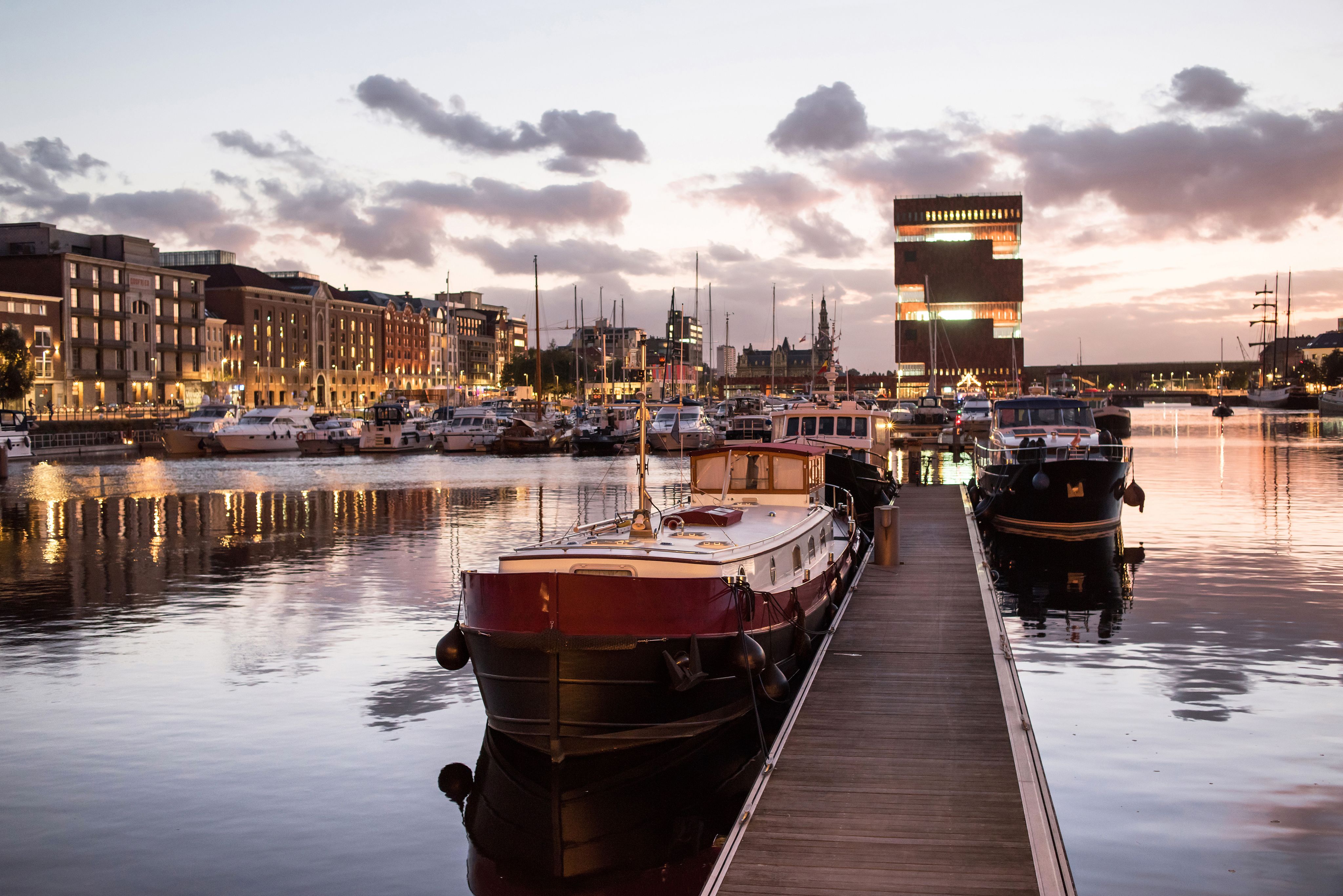
Eilandje area and port (AdobeStock)
Eilandje area and port (AdobeStock)

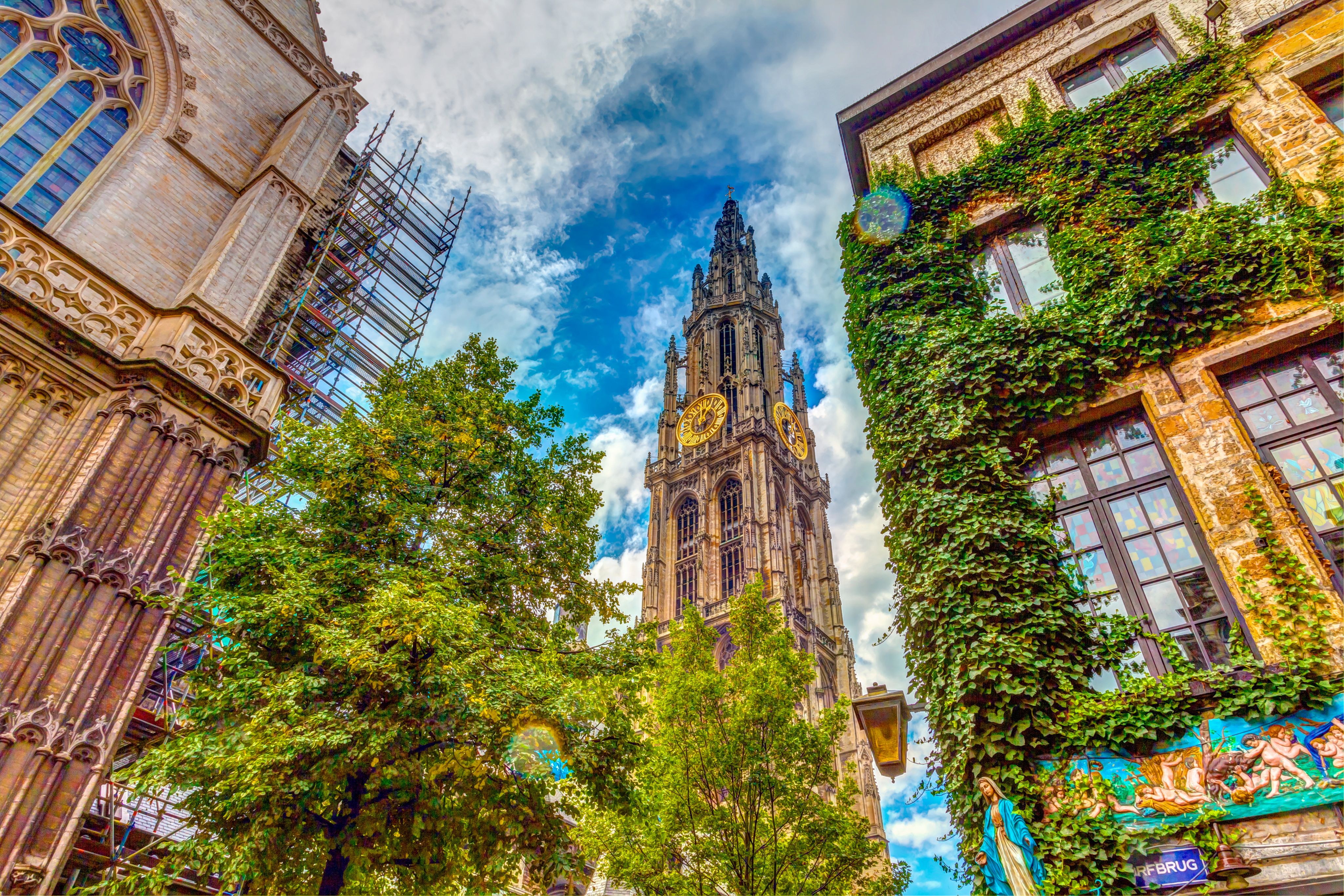
Cathedral of Our Lady (AdobeStock)
Cathedral of Our Lady (AdobeStock)
Antwerp map
“The Oosterweel project, with its various tunnel complexes, has certainly been an asset in our candidacy," he says. "But there are also numerous examples elsewhere in our country of underground infrastructure that have enabled our region to develop into a prosperous and thriving area over the past decades. The aim of the congress is that we exchange knowledge about tunnelling, but not only about the construction of tunnels, but more and more in the last years, about how we build tunnels in a sustainable way. The Oosterweel is not only a construction project, it is also about the environment and connecting the outskirts of the city to the centre.”
Because the tunnel congress features a large exhibition, it will take place at Antwerp Expo, a convention and exhibition centre near the ring road, but for associations who don’t require much exhibition space, or any, a more convenient – and, frankly, more enticing option – would be the rather lovely Flanders Meeting and Convention Centre, which backs onto the city’s zoo and is a matter of yards from the city’s central (and much vaunted) railway station.
When I am there, the venue is hosting the International Spinal Cord Society and I spot a dozen or so delegates, many of them doctors, using wheelchairs.
Antwerp's rapidly developing infrastructure includes a 'barrier-free' public transport system, tactile paving, safe crossings and city routes designed for wheelchairs.
Susan Hayden, director of Association Services Ltd, who has been running the conference for almost ten years, was fulsome in her praise for both the venue and the city at large. The venue, which opened in 2018, had been ‘carefully thought out' in terms of catering for people with disabilities.
“It's got more accessible lavatories than I've ever seen anywhere else in the world, which was amazing! But it’s also Antwerp itself. When we walked around the city, when we were taken on trips, everyone was very accommodating and listened to our questions. There was a lot of support from the city, introductions to networks and hospitals and institutions.”
The bureau worked with VISITFLANDERS, Visit Antwerp, the City of Antwerp, and Inter – Accessible Flanders to ensure that accessibility was integrated into every aspect of the conference. This attention to detail mattered, because, despite inclusion being high on the agenda in both public and corporate life, getting around is still a big challenge for people in wheelchairs.
Says Hayden: “It is really challenging. We're very limited in where we can go because of the need for accessible transport, accessible hotel rooms, accessible venue facilities, and accessible social venues. If we're in Europe, a lot of them are historic buildings, and they might have one lavatory, possibly down by the kitchens, and they may have one lift, but again, it's the goods lift. It limits our choices. So that's why I said Antwerp was a gift from God, not just the venue, but the railway station, which is sublime. The connections are great, to Amsterdam, to the UK, across Europe … absolutely fantastic.”
If Antwerp’s first golden age was in the 16th century, its revival came during the late 18th to early 19th century, when Napolean, realising the strategic importance of its location, enlarged the harbour and deepened the Scheldt to allow larger ships to enter the city. His aim was to rebuff the Port of London and hamper British growth. His defeat at the Battle of Waterloo in 1815 put paid to those ambitions, but his impact on Antwerp can still be felt today. Fifteen years later, in 1830, the city, hitherto part of the United Kingdom of the Netherlands, became part of the fledgling state of Belgium.
Antwerp is rightly proud of its past, because it is a past that resulted in the diverse, multicultural, outward-looking place it is today. A small city with a big city mentality.

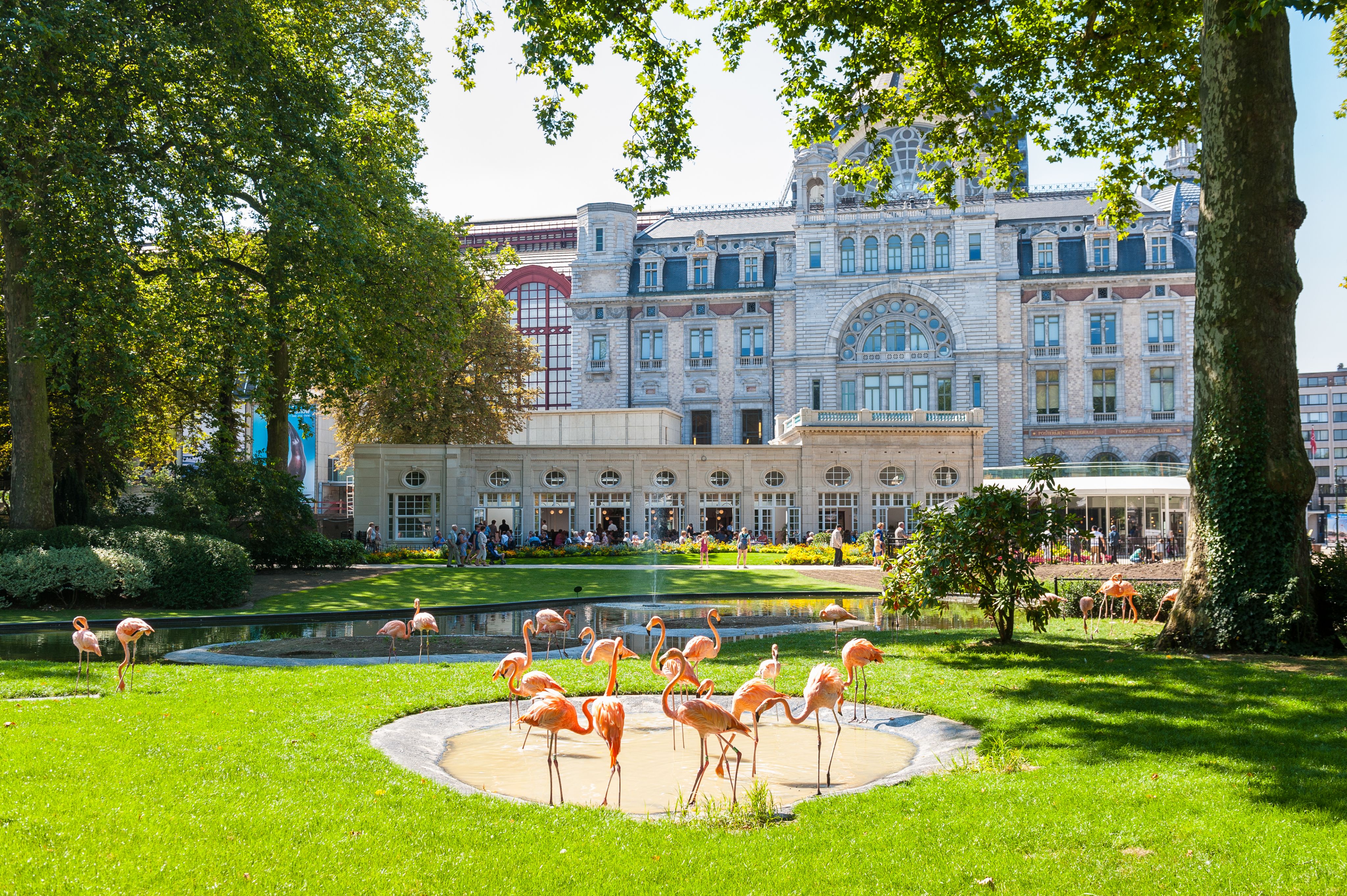
Antwerp Zoo (Antwerp Convention Bureau)
Antwerp Zoo (Antwerp Convention Bureau)
The knowledge
Getting there: Antwerp is a short train journey (40 minutes) from Brussels Midi railway station, home of Eurostar, and 20 minutes by train from Brussels Airport. Alternatively, Schiphol Airport in Amsterdam is a little over 1hr on the train.
Meet and greet: The Stock Exchange is a beautiful venue which can hold up to 1,200 people. It can cater for small meetings, too, with various halls and breakout rooms. Horta Grand Café and Art Nouveau Hall consists of a public brasserie on the ground floor and the private Art Nouveau Hall on the upper level, which is available for meetings or networking receptions. The hall contains girders rescued from Maison du Peuple, in Brussels, which was pulled down in 1965. Another option would be the charming Hofkamer, an 18th century rococo show room, situated next to the Grand Place of Antwerp, hidden at the end of a walled garden. The ceiling-hung canvases depicting the Greek gods would get the conversation started.
Want to impress? At the last count Antwerp was home to 18 Michelin-starred restaurants, so eating in style is not a problem. But if you want to eat and meet in style, you should check out the Botanic Sanctuary, a 15th century monastery turned achingly beautiful 5* hotel. The sumptuous venue boasts three separate Michelin-starred restaurants and 14 multifunctional conference rooms, the largest catering for up to 500 people.
Accommodation: For delegates with mobility issues, the Radisson Blu right next to the station and conference centre might be your best option, otherwise the city has all the other major hotel chains you would expect to find, including Mercure, Hilton, Leonardo etc. as well as a plethora of smaller, boutique options. Hotel Franq – a former bank – in the heart of the city is close to most of the main meeting options and has pleasant rooms, a 1* Michelin restaurant, and a nice bar. It also has various meeting spaces of its own, including the old vault – now a wine cellar – and a beautifully preserved 17th century cottage in the gardens.
James was hosted by Antwerp Convention Bureau and is grateful for the expertise of author and city guide Tanguy Ottomer.

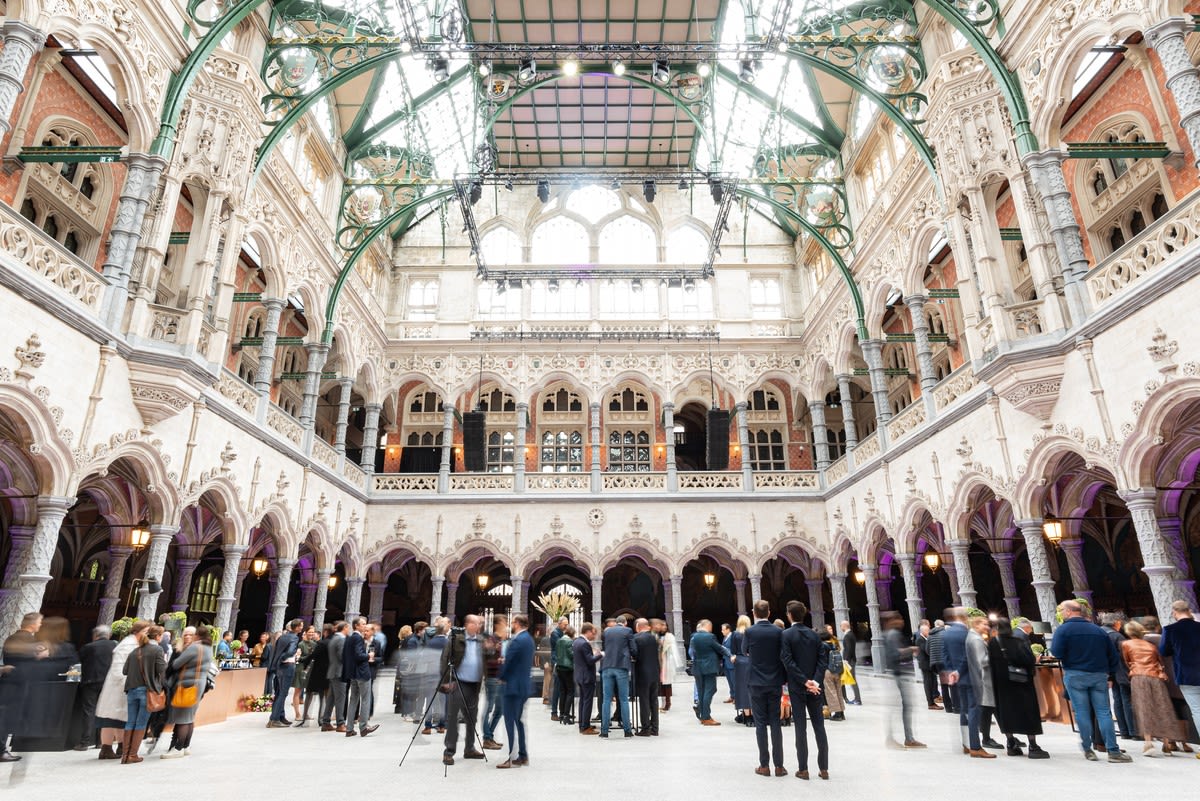
Stock Exchange (Antwerp Convention Bureau)
Stock Exchange (Antwerp Convention Bureau)


 Built with Shorthand